
Portable Lighting
Floor Lamps
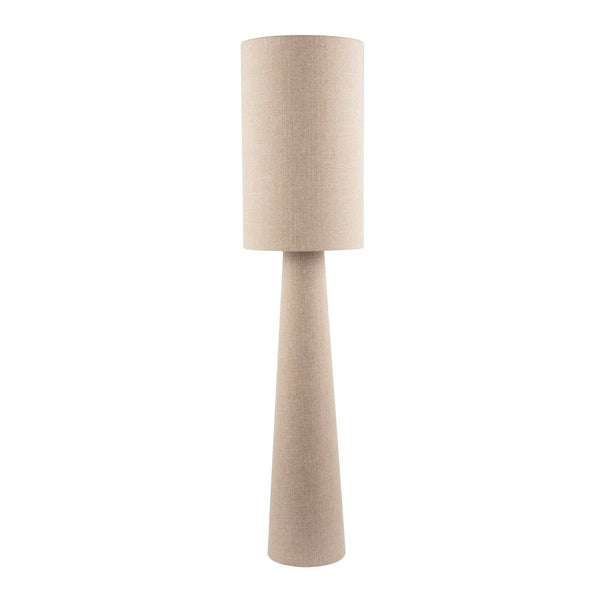
Standing pieces for reading chairs, sofa corners, and the unfilled space beside a low cabinet. The right floor lamp is the most underused tool in a living room — it adds a vertical line, a pool of warm light, and a sense that the room was finished by someone who lives in it.
Filters
1 item
Sort Most relevant

Buying Guide
Frequently Asked Questions
How much space should I leave around a floor lamp?
Allow at least 30-40cm of clearance around a floor lamp for safe passage and to prevent it being knocked over. Arc floor lamps need additional space—the shade should hang at least 20cm away from seating and ideally 40-50cm above side table height. Keep lamp bases away from high-traffic doorways and consider weighted bases in homes with children or pets.
Can I use smart bulbs in floor lamps?
Yes, most floor lamps accept smart bulbs as long as the bulb type (E27 or E14) and wattage limit match the fitting. Avoid using smart bulbs with lamps that have built-in dimmer switches, as this creates conflicts—either use the mechanical dimmer with standard dimmable bulbs, or remove/bypass the dimmer and control brightness via the smart bulb. Check your floor lamp's maximum wattage rating, typically 40-60W for traditional fittings.
Do floor lamps need to be hardwired or can they just plug in?
Floor lamps in the UK are designed to plug into standard 13A sockets and require no hardwiring, meaning no electrician or Part P notification is needed. Simply position near a suitable socket and use the inline switch or foot switch provided. Avoid running cables under rugs or across walkways—use cable management clips along skirting boards if the nearest socket is distant.
What height should a reading floor lamp be?
The bottom of the shade should sit at approximately 95-110cm from the floor when placed beside a chair or sofa, directing light over your shoulder onto your reading material. Adjustable arm floor lamps offer the most flexibility, letting you position the light source 25-40cm to the side and slightly behind your seating position. For task reading, choose lamps with a minimum 400-500 lumens output.
Can floor lamps provide enough light for a whole room?
A floor lamp alone typically cannot adequately light an entire room, as they provide ambient or task lighting rather than general illumination. For a sitting room, combine a floor lamp (around 800-1500 lumens) with ceiling lighting and table lamps to create proper layered lighting. Torchiere-style floor lamps that direct light upward provide better ambient coverage than directional reading lamps, but still work best as supplementary lighting.
What's the difference between E27 and E14 bulbs in floor lamps?
E27 (Edison Screw) is the standard large 27mm screw fitting common in floor lamps, whilst E14 (Small Edison Screw) is the 14mm version used in more compact or decorative fittings. Check your floor lamp's socket before purchasing bulbs—E27 and E14 are not interchangeable. Most UK floor lamps use E27 fittings, but multi-arm or candelabra-style floor lamps may use multiple E14 bulbs instead.
Do tripod floor lamps tip over easily?
Tripod floor lamps are generally stable when the legs are fully extended (typically spanning 50-70cm), but lighter models under 3kg can tip if knocked or placed on thick carpet. Look for tripod bases made from solid wood or metal rather than hollow legs, and position them away from circulation routes. On deep pile carpet, the legs may sink unevenly—consider rubber feet caps or place small plates under each leg for stability.