Shop by Room

Kitchen Lighting

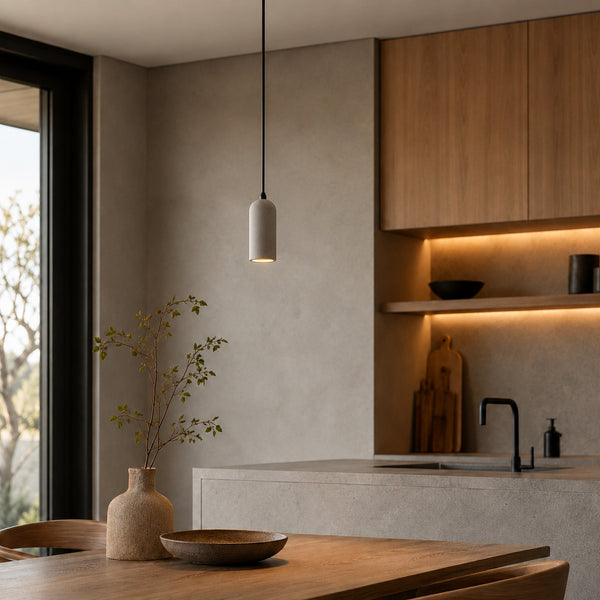
Kitchens are working spaces in the morning and gathering spaces in the evening, which makes them the hardest room to light well. Our kitchen edit covers both registers — pendants over islands and tables for atmosphere, ceiling fittings for ambient fill, sconces for the moments in between. We default to 3000K bulbs in kitchens, clean enough for prep and warm enough for an evening at the table.

9 pieces
Skip to results list
Availability
Price
to
The highest price is £95
Clear
9 items
Column grid
Column grid

Filter

Availability
Price
to
The highest price is £95
Buying Guide

The kitchen has evolved from a purely functional space into the heart of the modern home—a place for cooking, gathering, working, and entertaining. Getting the lighting right here matters more than in almost any other room. You need bright, focused task lighting for safe food preparation, ambient lighting for atmosphere, and often accent lighting to highlight features or create zones. Kitchen lighting isn't about a single fixture doing everything; it's about layering different sources to create a space that's both practical and inviting at any time of day.

Layering Your Kitchen Lighting

Professional kitchen designers work with three distinct lighting layers, and you should too. Task lighting is your priority—this is what illuminates worktops, hobs, and sinks where you're handling sharp knives and hot pans. Under-cabinet LED strips or puck lights are the workhorses here, typically mounted towards the front edge of wall units to minimise shadows. For kitchen islands, pendant lights hung 70-75cm above the worktop provide focused downlight exactly where you need it.

Your ambient lighting provides overall illumination and sets the room's character. This often comes from ceiling-mounted fixtures—flush or semi-flush lights in kitchens with lower ceilings (below 2.4m), or statement pendants and chandeliers where ceiling height allows. Recessed downlights are popular for their clean look, but use them thoughtfully; too many creates a harsh, commercial feel. Space them roughly 1.2-1.5m apart and keep them at least 60cm from wall units to avoid casting shadows onto your work surfaces.

Finally, accent lighting adds depth and atmosphere. This might be LED strips inside glass-fronted cabinets, lighting above wall units that washes the ceiling, or low-level plinth lights. These layers aren't all on at full brightness simultaneously—that's why dimmer switches are essential in kitchens. You want bright, clinical light for Sunday meal prep and soft, ambient glow for Friday evening drinks.

Choosing the Right Fixtures

Island pendants are the most visible lighting decision you'll make. The sizing rule: for islands up to 1.5m long, two pendants work well; for islands 1.8-2.4m, use three. The pendants themselves should be roughly 25-30cm in diameter for a balanced look—anything smaller looks apologetic, anything larger overwhelms unless you have a genuinely huge space. Hang them 70-75cm above the worktop; higher and they lose their task-lighting function, lower and tall people will object.

If your kitchen has a dining area, that space needs its own dedicated lighting—a pendant or chandelier hung 75-80cm above the table surface. This creates visual separation between the cooking and eating zones while keeping the fixture high enough that seated diners aren't staring into a bulb.

Ceiling lights above the main kitchen area should be chosen based on your ceiling height and style preferences. Flush mounts (projecting less than 15cm) suit rooms with ceilings below 2.4m. Semi-flush mounts (15-30cm drop) work in standard 2.4m ceiling heights and offer more design presence. Only go for chandeliers or large pendants as main ceiling lights if you have 2.7m or more headroom and want to make a statement.

Practical Considerations for Kitchen Environments

Kitchens are steamy, greasy environments, and your lighting needs to cope. Look for IP ratings if fixtures are near sinks or hobs—IP44 is splash-proof and sensible for these zones. Glass and metal finishes are easier to clean than fabric shades, which absorb cooking odours and grease over time.

The most common mistake is choosing warm white (2700K) LEDs throughout. While these create ambience, they make task lighting less effective and can make your kitchen feel dingy during daytime. Use cool white (4000K) for task lighting and warm white (2700-3000K) for ambient and accent layers. Modern LED bulbs are dimmable, but check compatibility with your dimmer switches—not all combinations work smoothly, resulting in flickering or limited dimming range.

Finally, consider your kitchen's style. Industrial-style pendants with exposed bulbs suit contemporary and urban spaces but can feel harsh in traditional kitchens. Glass globe pendants are versatile enough for both modern and classic schemes. If you have a period property, consider how your lighting either complements or deliberately contrasts with original features—both approaches work, but avoid accidentally landing somewhere in the middle.

Frequently Asked Questions
What are the three types of lighting I need in a kitchen?
A well-lit kitchen requires three layers: ambient lighting (usually ceiling-mounted fixtures or downlights for overall illumination), task lighting (under-cabinet strips or pendants over worktops and islands for food prep), and accent lighting (optional decorative elements like wall lights or plinth lighting). Most kitchen lighting schemes need 300-400 lumens per square metre for general lighting, with task areas requiring 700-800 lumens per square metre.
What height should pendant lights hang over a kitchen island?
Kitchen island pendants should typically hang 70-75cm above the worktop surface, or approximately 150-160cm from the floor for standard-height islands. For longer islands over 2 metres, use multiple pendants spaced 60-80cm apart rather than a single large fixture, ensuring you maintain at least 30cm clearance from the edge of the island to avoid head collisions.
Do I need an electrician to install kitchen lighting or can I DIY?
Under Part P of UK Building Regulations, you can replace existing light fittings yourself on a like-for-like basis, but any new circuits or modifications to kitchen lighting circuits must be installed by a qualified electrician or certified under Building Control. Kitchen lighting also requires IP ratings of at least IP44 within zones near sinks and hobs, and all installation work must comply with BS 7671 wiring regulations.
Can I use smart bulbs and dimmers with all kitchen light fittings?
Most kitchen fittings with standard E27, E14, GU10, or B22 lamp holders are compatible with smart bulbs, but always check the maximum wattage rating on the fixture. If installing dimmer switches, ensure they're compatible with LED bulbs (look for 'trailing edge' or 'LED-compatible' dimmers), and note that you cannot use a dimmer switch with smart bulbs that have built-in dimming functions as this causes flickering and connectivity issues.
What IP rating do I need for lights near the kitchen sink and hob?
Lights installed within 60cm of a kitchen sink or tap require a minimum rating of IP44 (protection against water splashes), whilst lights directly above hobs should be IP20 at minimum but positioned with adequate heat clearance as per manufacturer guidelines. Standard kitchen ceiling lights away from water sources can be IP20, though IP44-rated fittings throughout are recommended in kitchens due to steam and condensation.
How many downlights do I need for a 4x3 metre kitchen?
For a 12 square metre kitchen, you'll typically need 6-8 downlights (approximately one per 1.5-2 square metres) with each producing 400-600 lumens if using them as the sole ambient lighting. Space them evenly in a grid pattern approximately 1-1.5 metres apart, keeping at least 60cm away from walls and cupboards, and ensure they're fire-rated if your kitchen ceiling is below another floor.
Should I choose warm or cool white bulbs for kitchen lighting?
Most kitchens benefit from layering different colour temperatures: 4000K cool white (neutral) for task lighting over worktops and islands where you need clarity for food preparation, and 2700-3000K warm white for ambient and dining areas to create a more inviting atmosphere. Alternatively, use tuneable white smart bulbs that allow you to adjust the colour temperature throughout the day, ranging from energising 4000K during cooking to relaxing 2700K for evening meals.
}