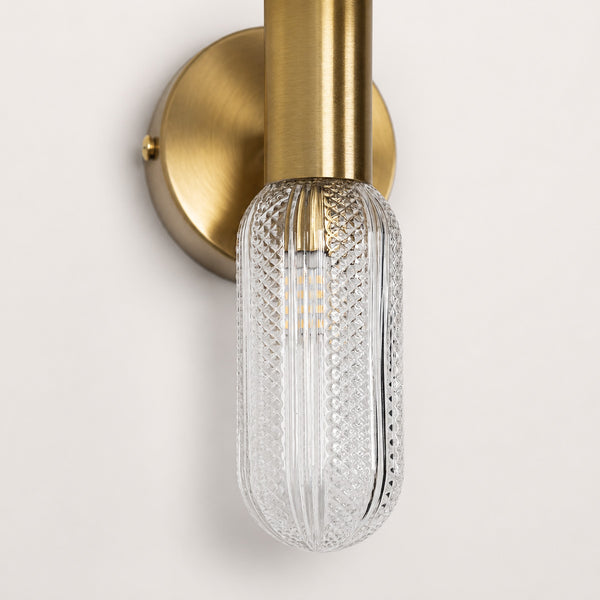
Wall Lighting
Wall Sconces
Sculptural wall lights for hallways, bedrooms and living rooms. From plaster uplights to articulated reading sconces.
-

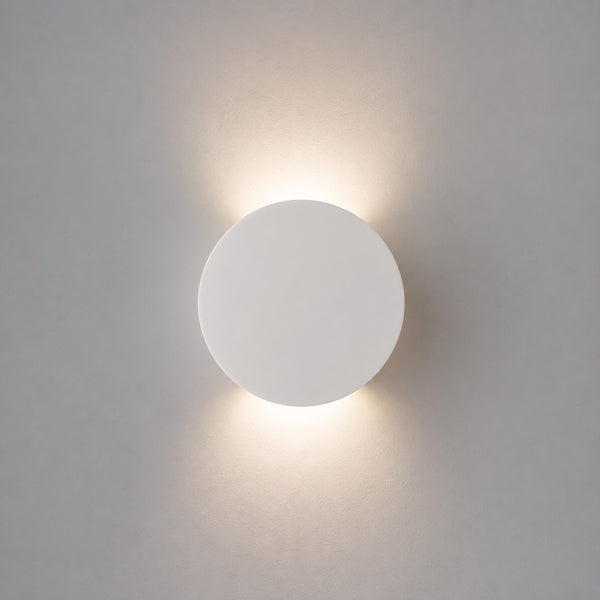
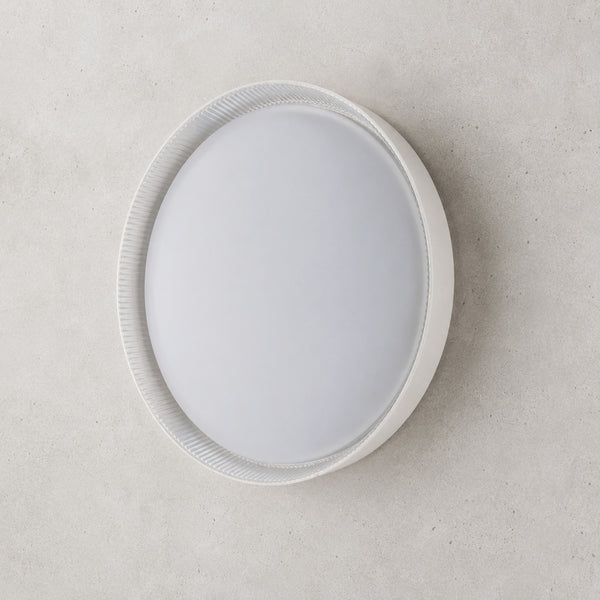
Vesper Wabi Sabi Round Wall Sconce — Travertine, Natural Stone
Stone warmth for contemplative corners
Natural StoneIntegrated LED£65In stockView product → -

WALL LIGHTS
Petra Wabi-Sabi Travertine LED Wall Light — Natural Stone
Earthy textures meet gentle illumination
Natural Stone£65In stockView product → -

WALL LIGHTS
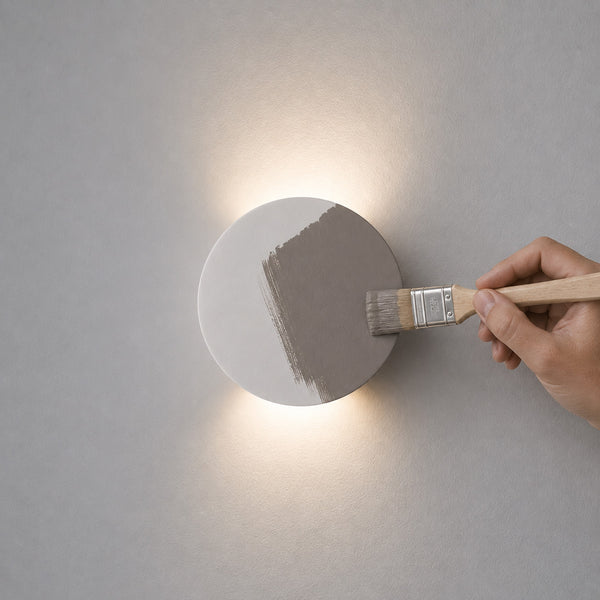
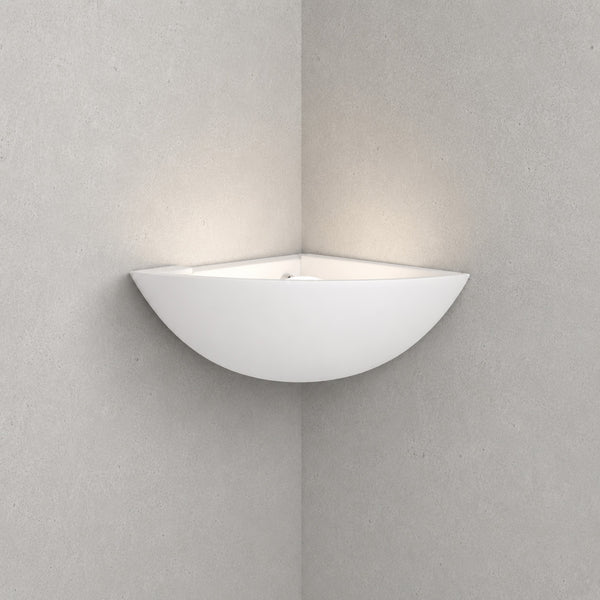
Bianca Paintable Up/Down Wall Light — Plaster, White
Paintable architectural wall wash in smooth white plaster
WhiteE14 SES£40In stockView product → -

WALL LIGHTS
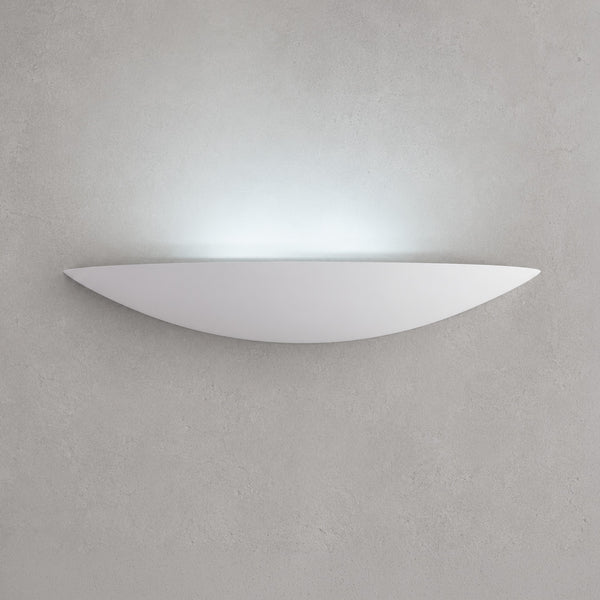
Galea Paintable Up/Down Light — Plaster, White
A canvas for light and architecture
Smooth WhiteG91 lampholder£30In stockView product → -

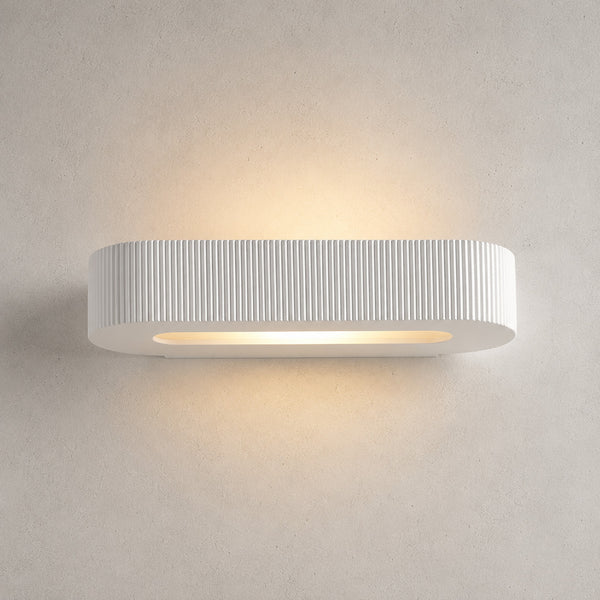
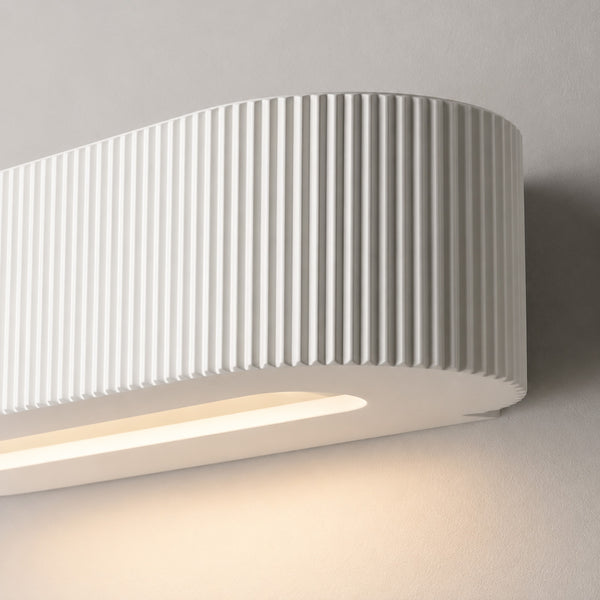
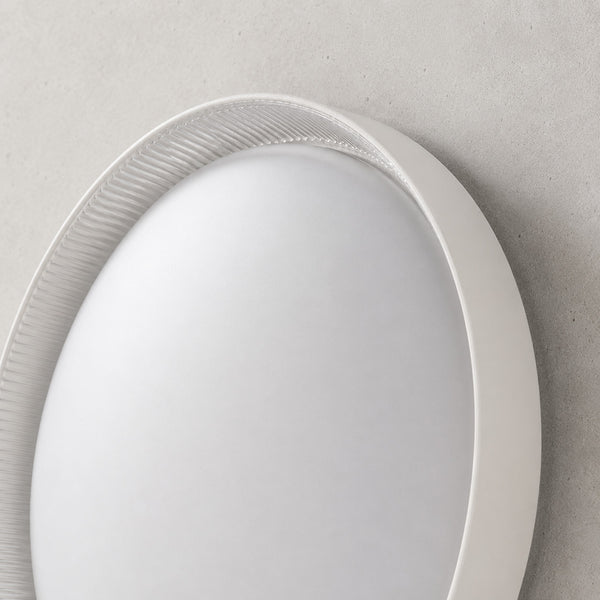
Onda Ribbed Paintable Up Down Wall Light — Plaster, White
Sculptural waves of light and shadow
Smooth WhiteG91 lampholder£65In stockView product → -
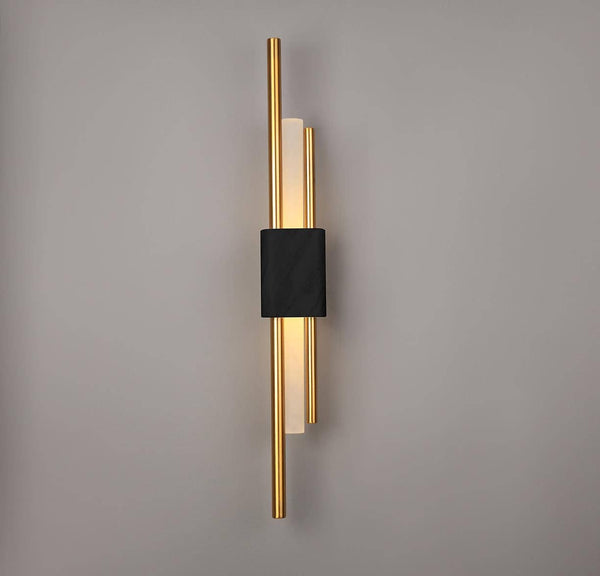
WALL LIGHTS
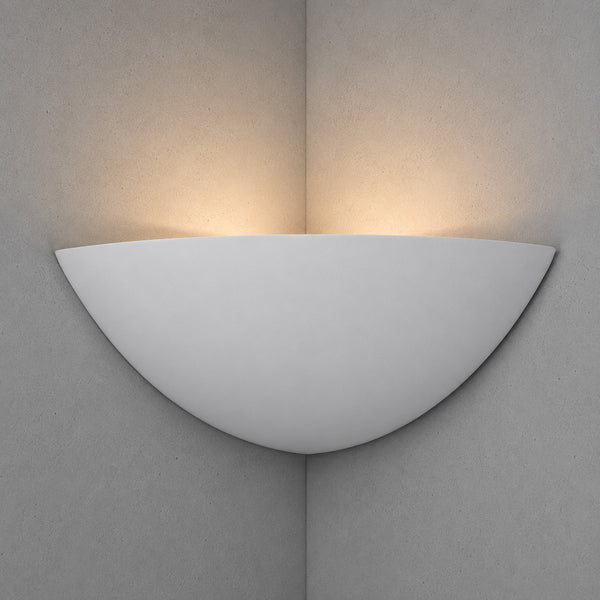
Corvo Up Down Paintable Wall Light Sconce — Plaster, White
Sculptural plaster casting light both ways
Smooth WhiteE27 ES1 lampholder£50In stockView product → -
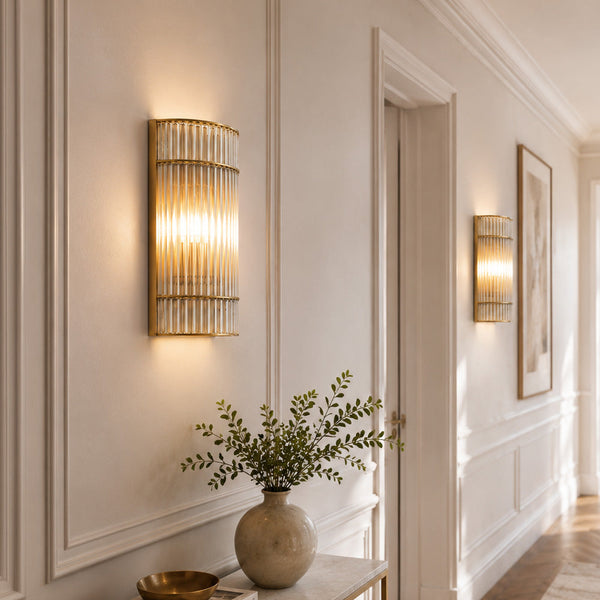
WALL LIGHTS
Vega Rotatable 320° LED Reading Wall Light — Aluminum, Black
Direct light exactly where you need it
BlackIntegrated LED£50In stockView product → -
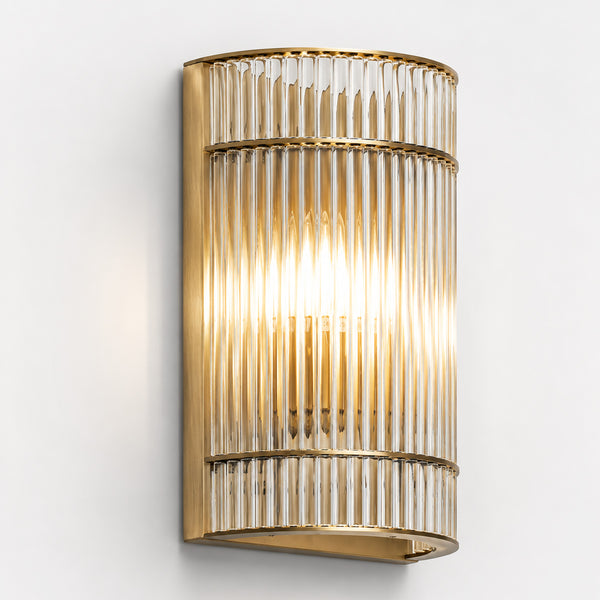
WALL LIGHTS
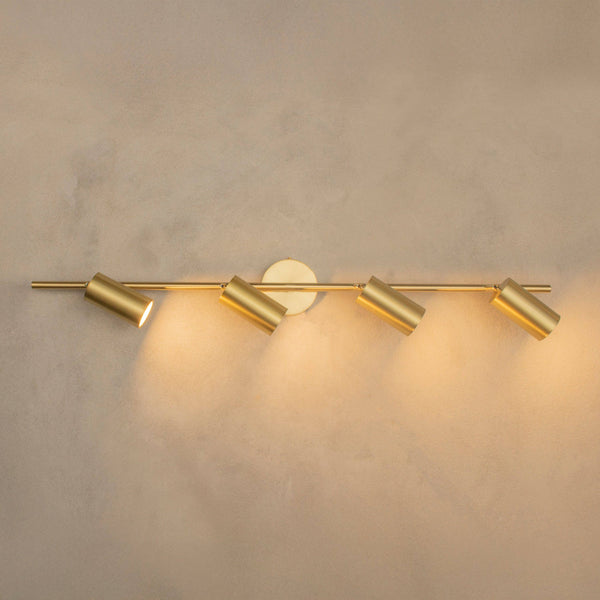
Vega Rotatable 320° LED Reading Wall Light — Aluminum, Brass
Direct your light exactly where needed
Brushed BrassIntegrated LED£50In stockView product →
Buying Guide
Frequently Asked Questions
What height should wall sconces be installed in a hallway or living room?
Wall sconces are typically installed 150-170cm from the floor to the centre of the fitting in hallways and living areas, roughly at eye level when standing. In bedrooms, bedside sconces should be mounted 130-150cm high, or about 50-60cm above the mattress top for reading. Adjust these heights based on ceiling height and the specific fixture size to maintain visual balance.
Do I need an electrician to install wall sconces under UK regulations?
Under Part P of the Building Regulations in England and Wales, you can legally replace an existing wall light fitting yourself, but installing a completely new circuit or light point requires the work to be done by a qualified electrician or notified to Building Control. In Scotland, almost all fixed electrical work must be done by a registered electrician. Most wall sconce installations connect to existing BESA boxes or backplates.
Can I use smart bulbs or install a dimmer switch with wall sconces?
Most wall sconces accept standard E27 or E14 bulbs and work perfectly with smart LED bulbs from Philips Hue, LIFX, or similar brands. If your sconce has an integrated switch, ensure it stays in the 'on' position for smart bulbs to function. For dimmer compatibility, check the fitting is rated for dimming and use a trailing-edge dimmer designed for LED loads to avoid flickering or buzzing.
How far apart should I space multiple wall sconces on the same wall?
Space wall sconces 180-240cm apart for even illumination in hallways and corridors, adjusting based on the brightness and spread of each fixture. For lighting either side of a mirror or artwork, position sconces 60-90cm apart or roughly 30-45cm from each edge of the feature. The beam angle and lumen output of your chosen sconce will determine the optimal spacing for your specific room.
What IP rating do I need for bathroom wall sconces?
Bathroom wall sconces require an IP44 rating minimum when installed in zones 1 and 2 (within 60cm of the bath or shower), while IP20 is acceptable outside these zones. Wall lights directly above a bath or shower (zone 1) need IP65 or higher. Always check the specific bathroom zones in your space and select sconces rated appropriately for safe installation.
Will wall sconces provide enough light on their own or do I need additional lighting?
Wall sconces are typically accent or ambient lighting rather than primary sources, providing 200-600 lumens per fitting depending on the design. For adequate illumination in a living room or bedroom, layer sconces with ceiling lights or floor lamps to achieve the recommended 150-300 lux. Hallways often work well with sconces alone when spaced appropriately, whilst bathrooms and kitchens usually require dedicated task lighting alongside wall fixtures.
Can wall sconces be installed on stud walls or do they need solid masonry?
Wall sconces can be safely mounted on plasterboard stud walls using appropriate hollow wall fixings or by securing to the timber studs directly, provided the fitting isn't excessively heavy (most are under 2kg). For heavier metal or glass sconces, locate and fix directly into studs, or fit a mounting board between studs during installation. Solid masonry walls simply require proper wall plugs and screws matched to the wall material and fixture weight.