
Shop by Size
Large Pendant Lights
Oversized pendant lights measuring 45cm to 85cm across. Woven rattan domes and wide multi-light fixtures for dining tables, kitchen islands and stairwells.
Filters
8 items
Sort Best selling
-
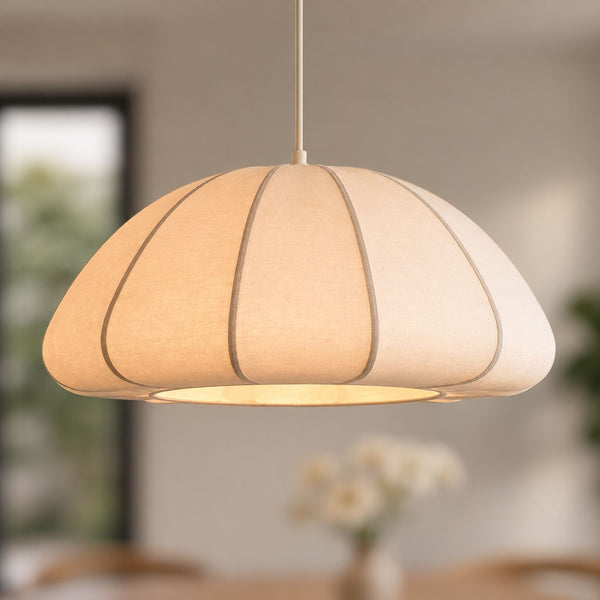
PENDANT LIGHTS
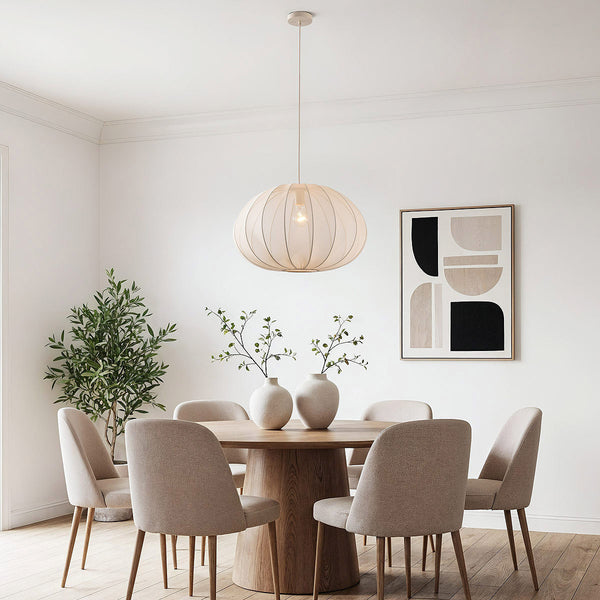
Ines Fabric Pendant Light — Off-White, 60 cm
Off-whiteE271 lampholder£160In stockView product → -
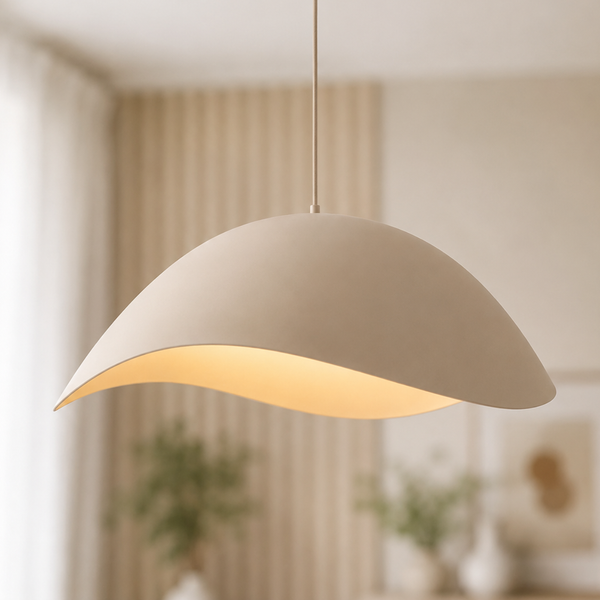
PENDANT LIGHTS
Nami Wavy Metal Pendant Light — Sand Taupe
Sand TaupeE271 lampholder£145In stockView product → -

PENDANT LIGHTS
Halo 3-Light Ribbed Drum Pendant — Glass, Antique Brass
Antique BrassE14 SES3 lampholders£210In stockView product → -
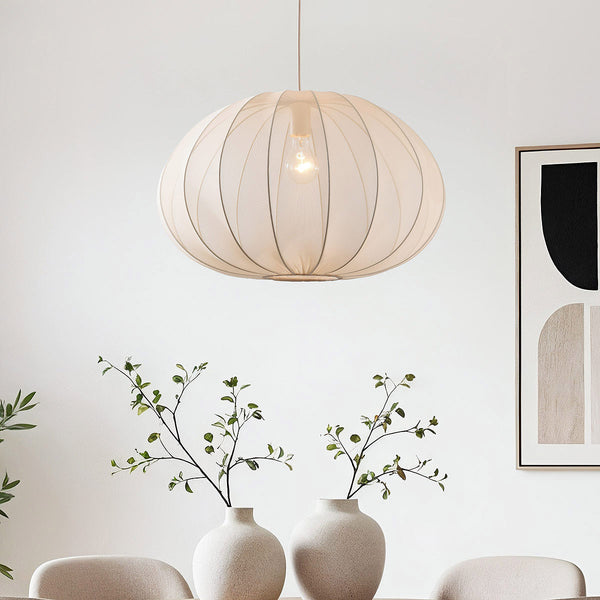
PENDANT LIGHTS
Odile Fabric Pendant Light — Light Beige, 59 cm
BeigeE271 lampholder£200In stockView product → -
For your first order
10% off your first light
Leave your email and the code arrives straight away.
Then a short email most weeks. Unsubscribe any time. Privacy policy
Thank you
Your 10% code is on its way to your inbox. Any light, 30 days, no minimum.
-
2 sizes
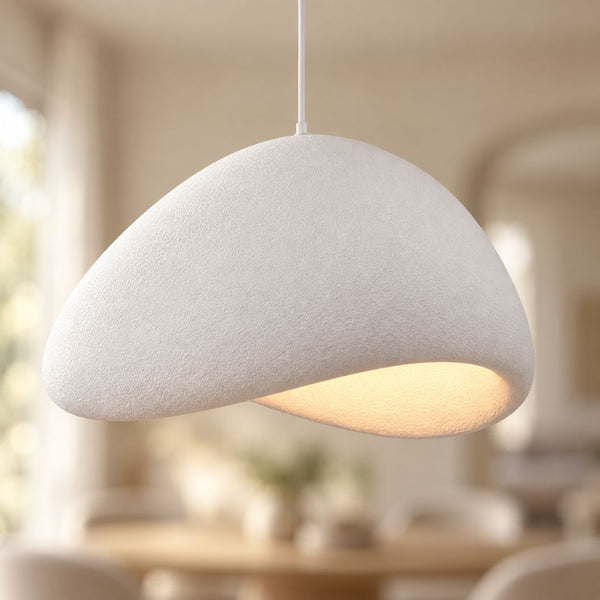
PENDANT LIGHTS
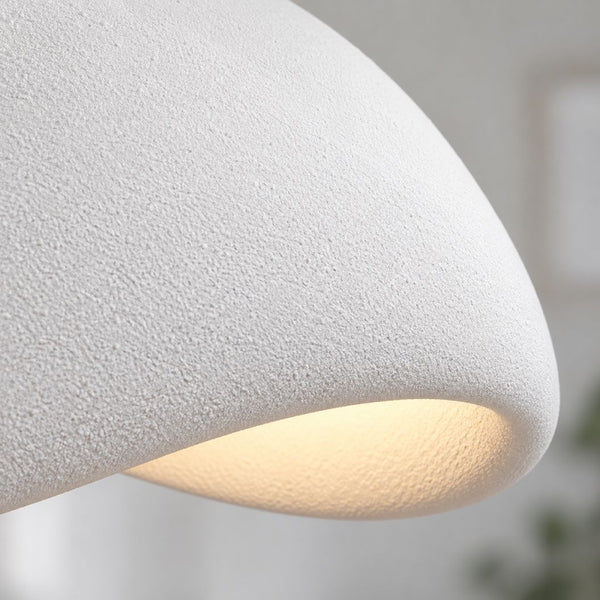
Senja Cloud Stone-Effect Pendant Light — White
WhiteE271 lampholderFrom £110In stockView product → -

PENDANT LIGHTS
Halo 5-Light Ribbed Drum Pendant — Glass, Antique Brass
Antique BrassE14 SES5 lampholders£240In stockView product → -
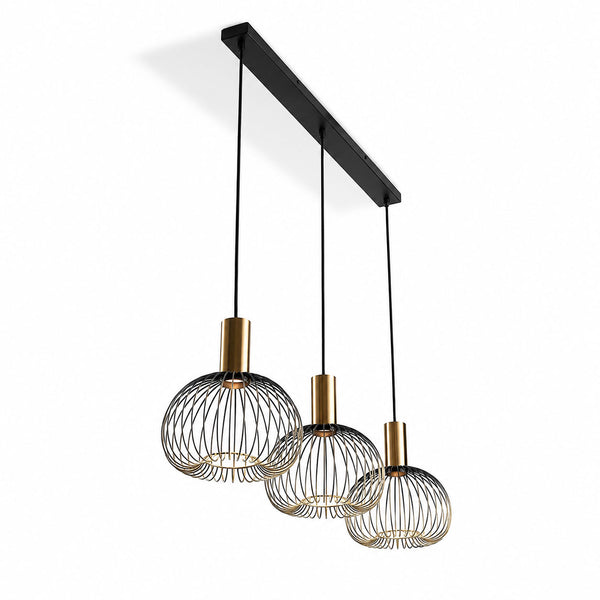
PENDANT LIGHTS
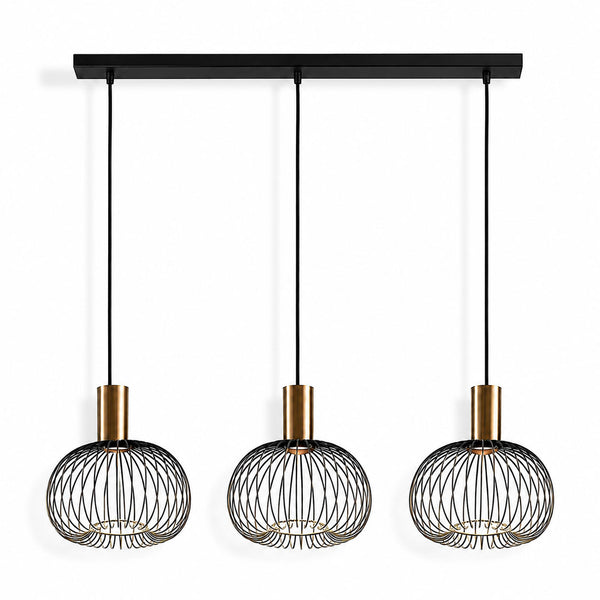
Velia 3-Light Cage Pendant Light — Black and Gold
Black and goldGU103 lampholders£210In stockView product → -
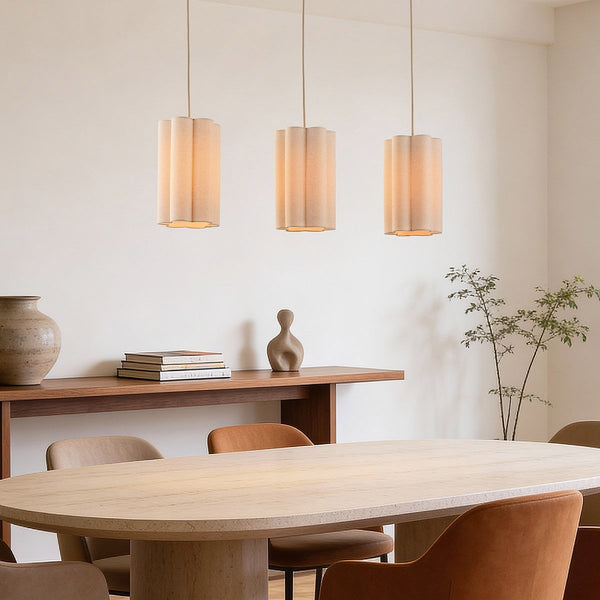
PENDANT LIGHTS
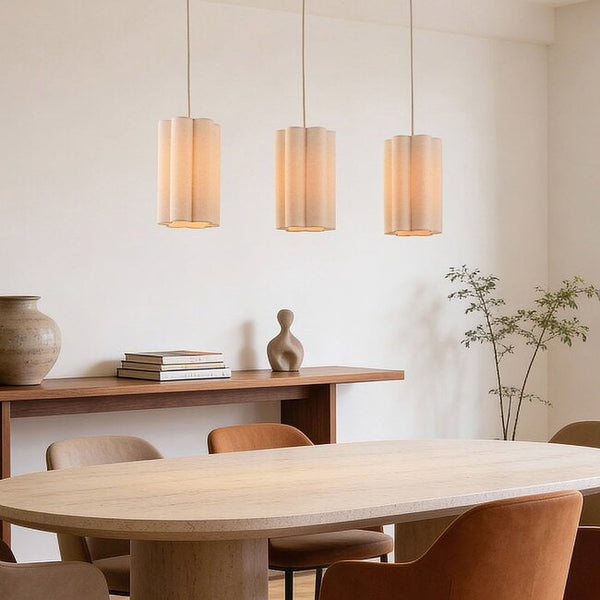
Liora 3-Light Linen Pendant Light — Beige
BeigeE27 ES3 lampholders£160In stockView product →




Buying Guide
Frequently Asked Questions
What size pendant light is considered large?
There is no official standard, but 45cm across is the usual threshold — below that a pendant reads as a light fitting, above it as a feature. Everything on this page measures at least 45cm in diameter or spread, running up to 66cm for the widest woven domes and 85cm across for multi-light fixtures.
How big should a pendant be over a dining table?
Roughly one third to one half the width of the table. A 120cm round table suits a 40–60cm pendant. For a long rectangular table, two or three smaller pendants or one linear fixture usually works better than a single very wide shade, which would sit awkwardly close to the diners at each end.
How high should a large pendant light hang?
Measure from the table, not the floor: the bottom of the shade should sit 75–90cm above the table surface. Where the pendant is not over furniture, keep at least 2.1m of clearance from the floor to the bottom of the shade so there is no risk of walking into it.
Are large pendant lights too heavy for a normal ceiling?
It depends on the material. A 66cm woven rattan dome often weighs less than a small glass globe and needs no special provision. Heavier metal and glass fixtures should be fixed into a joist or a noggin added between joists rather than relying on a plasterboard ceiling rose, and some need a mounting plate.
Will one large pendant light a whole room?
Only if it holds several lamps. Size does not create light — lampholders do. A single-bulb pendant gives roughly 800 lumens whatever its diameter, while a five-light drum gives around 4,000. For a dining room, aim for about 300–400 lumens per square metre of table on a dimmer.
Can the drop length be shortened?
Most of these pendants ship with a cable or rod that an electrician can shorten during installation. Very few can be extended, so if you have a tall or double-height room, confirm the maximum drop before ordering rather than assuming it can be lengthened later.
Do large pendants work in rooms with low ceilings?
Wide and shallow works better than deep and narrow. An open cage or a flat woven disc gives you presence at 45–60cm across without dropping far into the room. Avoid tall domes and long multi-tier fixtures under a 2.4m ceiling, and keep the pendant over furniture rather than over a walkway.
What bulb should I use in an oversized pendant?
Warm white at 2700K for dining and living spaces, 3000K over a kitchen island where you are working. Choose a dimmable LED, and if the lamp is visible from below through an open frame or a weave, pick a decorative filament style — at this scale a bare bright bulb is uncomfortable to sit under.