Shop by Finish
White Wall Lights
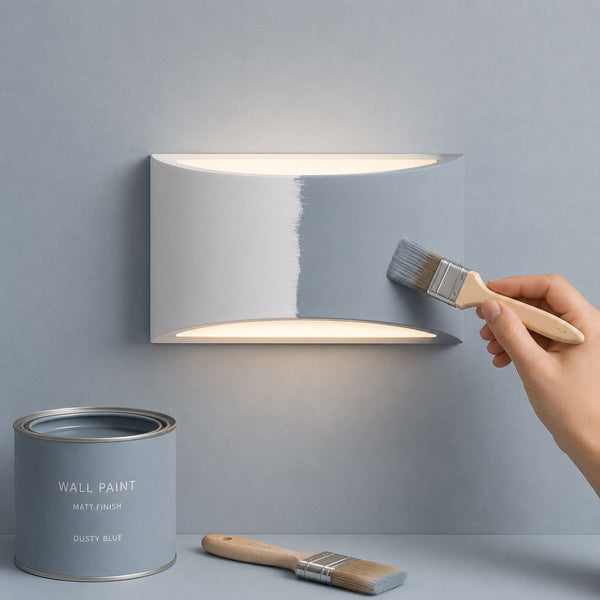
Paintable plaster that takes the same emulsion as your wall, plus handmade ceramic and glass. The fittings you notice least — which in a hallway is exactly the point.
Filters
13 items
Sort Best selling
-
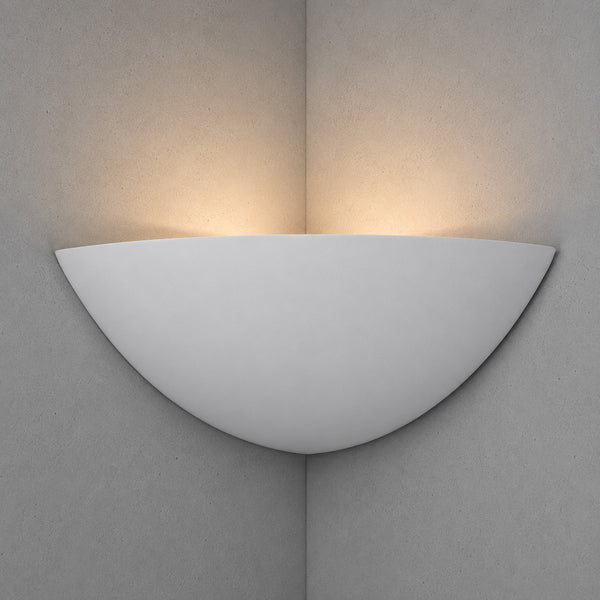
WALL LIGHTS
Santorini Corner Wall Light — Paintable White Plaster, Uplight
Paintable WhiteE14 SES1 lampholder£78In stockView product → -

WALL LIGHTS
Mykonos Corner Wall Light — Paintable White Plaster, Up & Down
WhiteE14 SES1 lampholder£68In stockView product → -
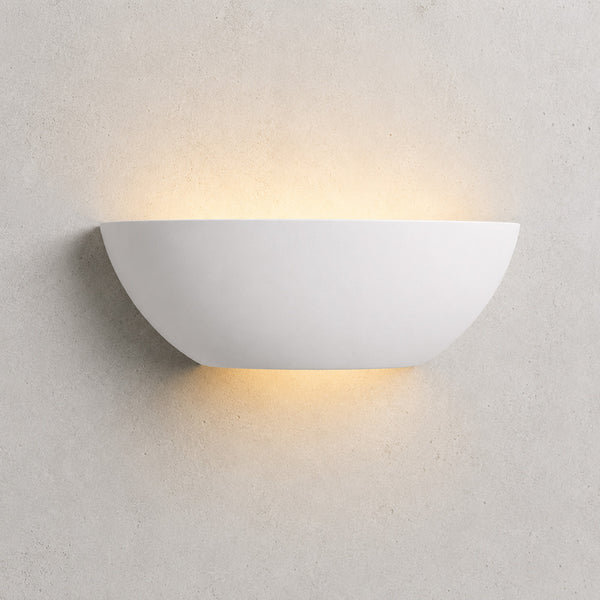
WALL LIGHTS
Bianca Paintable Up/Down Wall Light — Plaster, White
WhiteE14 SES1 lampholder£35UnavailableView product → -
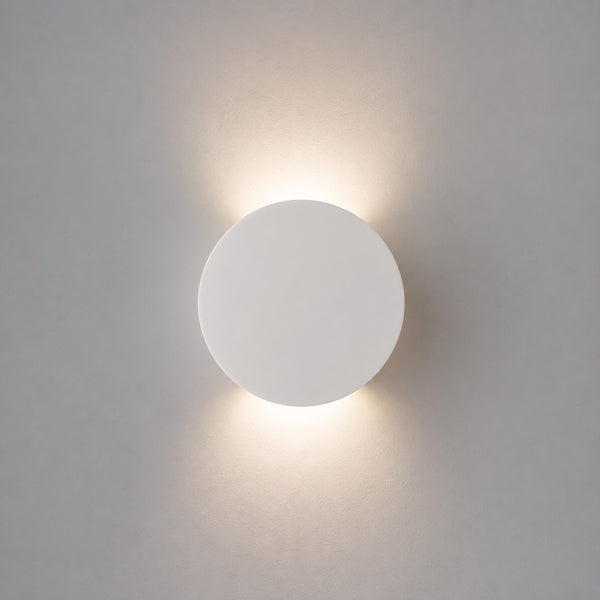
WALL LIGHTS
Leiron Round Wall Light — Paintable White Plaster, Up & Down
Paintable WhiteG91 lampholder£58In stockView product → -
For your first order
10% off your first light
Leave your email and the code arrives straight away.
Then a short email most weeks. Unsubscribe any time. Privacy policy
Thank you
Your 10% code is on its way to your inbox. Any light, 30 days, no minimum.
-
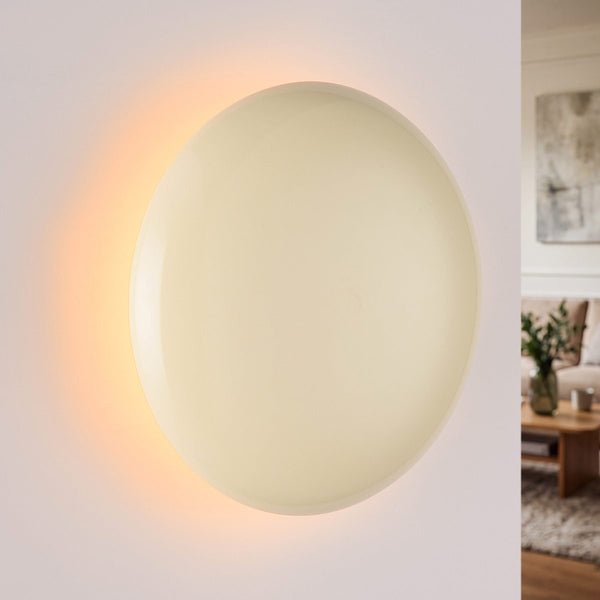
WALL LIGHTS
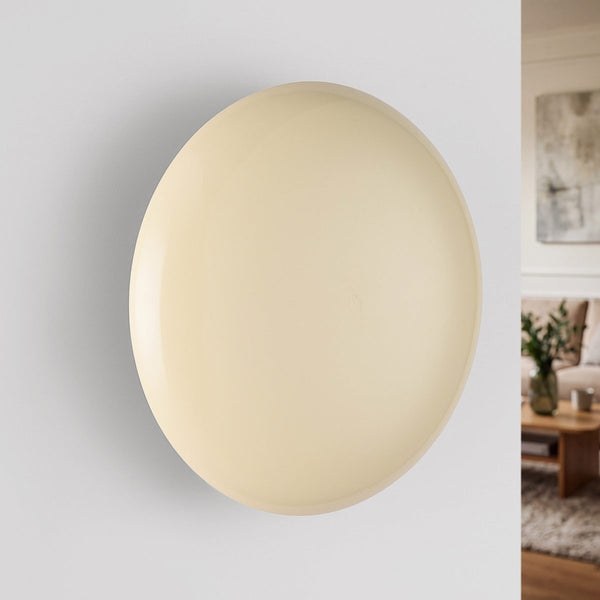
Pico Rechargeable Wall Light — Cream, Adjustable White
CreamIntegrated LED£95In stockView product → -
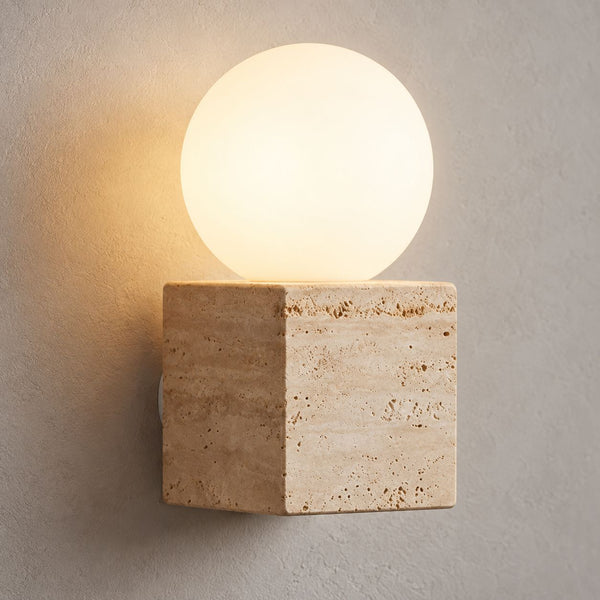
WALL LIGHTS
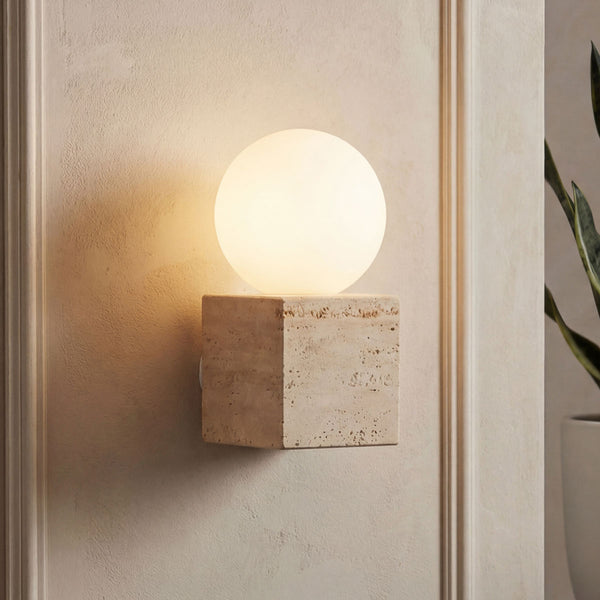
Isla Travertine Globe Wall Light — Sand Beige
Sand beige and whiteG91 lampholder£85In stockView product → -

WALL LIGHTS
Spoiler LED Wall Light — White, CCT
3 coloursWhiteIntegrated LED1 lampholderFrom £155In stockView product → -

WALL LIGHTS
Mood Wall Light — Paintable White Plaster, Up & Down
WhiteG92 lampholders£73In stockView product → -
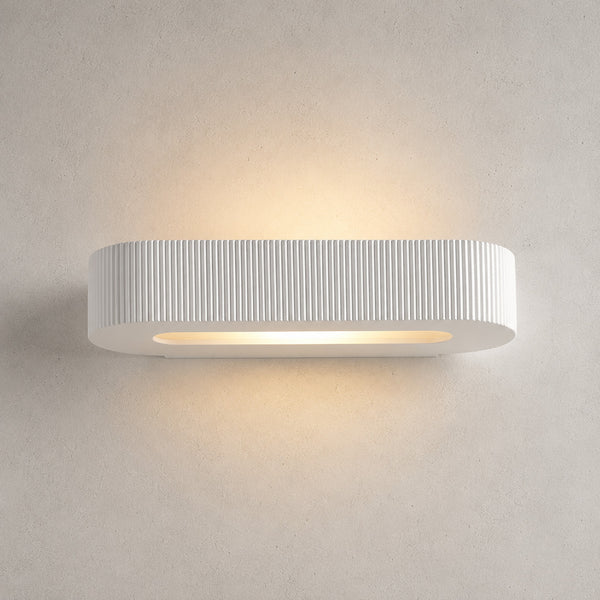
WALL LIGHTS
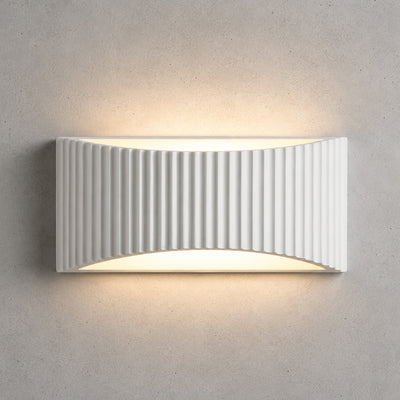
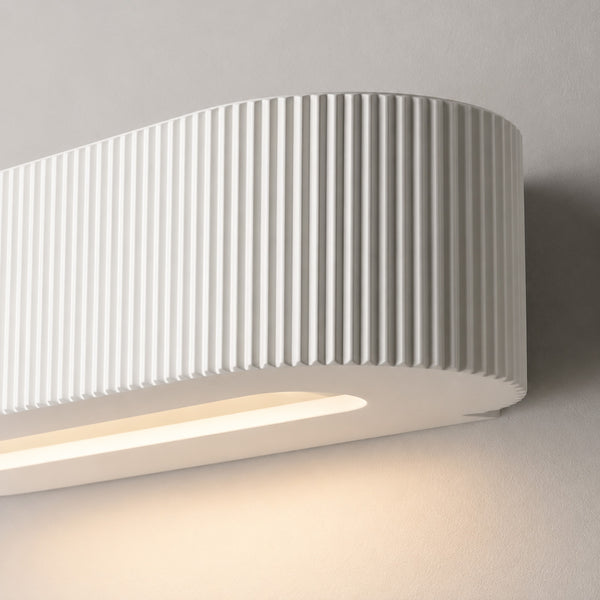
Bellona Ribbed Plaster Wall Light — Paintable White
Paintable WhiteE14 SES2 lampholders£78In stockView product → -
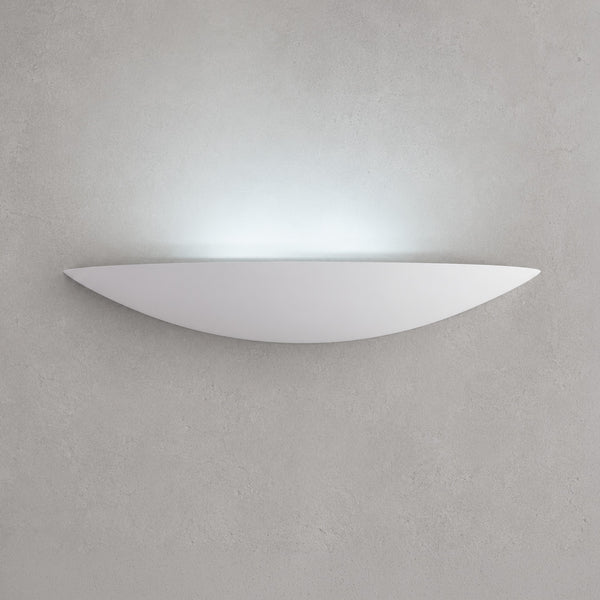
WALL LIGHTS
Livigno Wall Light — Paintable White Plaster, Uplight
3 coloursPaintable WhiteG92 lampholdersFrom £63In stockView product → -
2 sizes
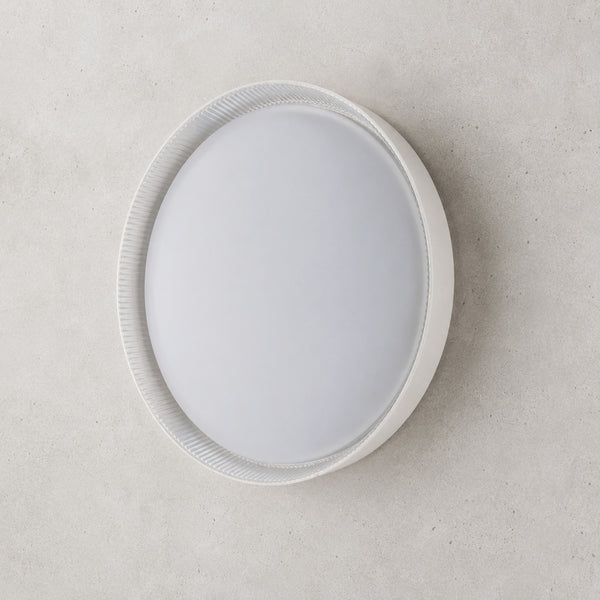
CEILING LIGHTS
Kaos LED Ceiling / Wall Light — White, Colour Temperature Switch
Satin WhiteIntegrated LED1 lampholderFrom £85In stockView product → -
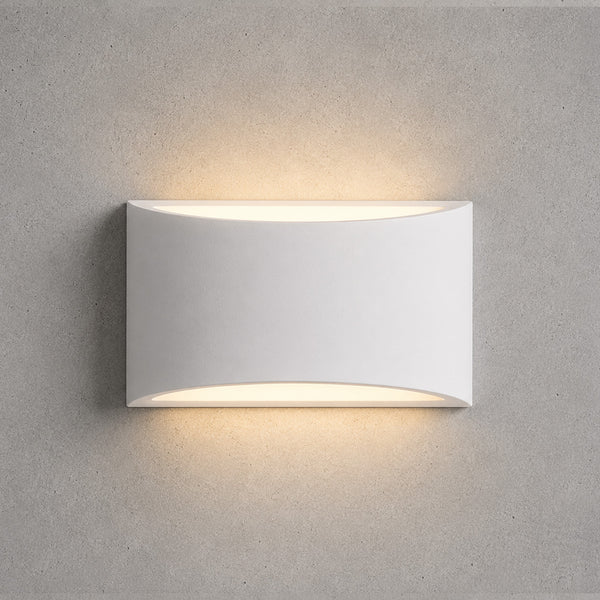
WALL LIGHTS
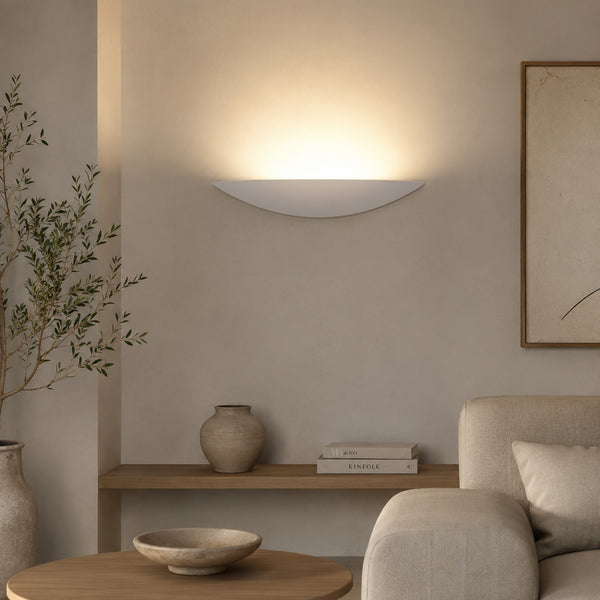
Galea Paintable Up/Down Light — Plaster, White
Smooth WhiteG91 lampholder£32Made to orderView product →





Showing 12 of 13
Buying Guide
Frequently Asked Questions
Can you paint plaster wall lights?
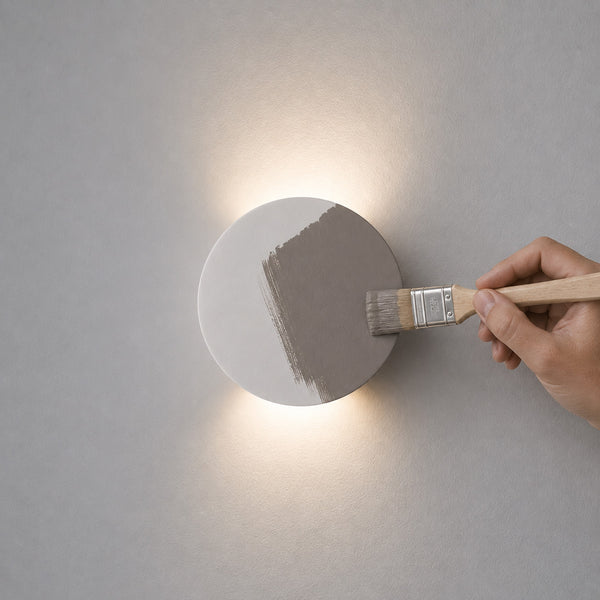
Yes — paintable plaster fittings are supplied unfinished precisely so they can be painted in the same emulsion as the wall. No primer or specialist paint is required; the tin you used on the wall is the correct product. Paint after installation rather than before, so handling marks and the joint between the fitting and the wall are covered in the same coat.
Do white wall lights show up imperfections in the wall?
The finish does not, but the beam might. Fittings that graze light along the wall — uplighters and up-down designs — exaggerate filler marks, a poor skim or textured paper, regardless of colour. On smooth, well-finished plaster the effect is clean. If the wall is in poor condition, either make good first or choose a fitting that projects further so the light strikes at a wider angle.
Are plaster wall lights fragile?
Gypsum plaster chips if knocked, so unpack carefully and handle the fitting by its body rather than its edges during installation. Once mounted and painted it is no more vulnerable than the wall around it, and small chips can be filled and repainted with ordinary filler and emulsion — an advantage no metal fitting has.
Can plaster wall lights be used in a bathroom or outdoors?
No. Gypsum is porous and absorbs moisture, so plaster fittings are for interior, dry locations only. For bathrooms, choose a piece with an IP rating appropriate to its zone — IP44 minimum in Zones 1 and 2. Ceramic and glass white fittings can be suitable where they carry the correct rating; check the product page.
What bulb suits a white wall light?
2700K warm white with a CRI of 90 or above. White fittings are more sensitive to bulb colour than dark ones, because the light reflects off the fitting as well as passing through it — a cool bulb makes white plaster look grey and slightly clinical. Where the fitting washes a coloured wall, high colour rendering matters more still.
Will a white light fitting yellow over time?
Painted plaster will not, and can be repainted whenever the room changes. Some plastic and older painted-metal fittings do yellow with prolonged heat, which is one reason LED lamps — which run far cooler than halogen — have made white fittings more practical than they used to be. Ceramic and glass are stable indefinitely.
What height should white wall lights be mounted at?
Mount at 1.5 to 1.7 metres from the finished floor, the same as any decorative wall light. Where the ceiling is tall, the upper end of that range looks better with uplighters and up-down fittings, because it centres the light on the wall rather than pushing it into the ceiling. Space fittings every 2 to 2.5 metres along a corridor.
Do I need an electrician to fit white plaster wall lights?
These are hardwired fittings, so in practice yes. A like-for-like replacement on an existing wall light point may not be notifiable, but new wiring, a new switch drop, or any electrical work in a bathroom is notifiable under Part P of the Building Regulations and must be carried out by a registered electrician or signed off by Building Control.