Shop by Finish
Brass Wall Lights
Antique, aged, satin and brushed brass wall lights — sconces, uplighters and up-down fittings slim enough for a narrow hallway, plus IP-rated pieces for the bathroom.
Filters
16 items
Sort Best selling
-
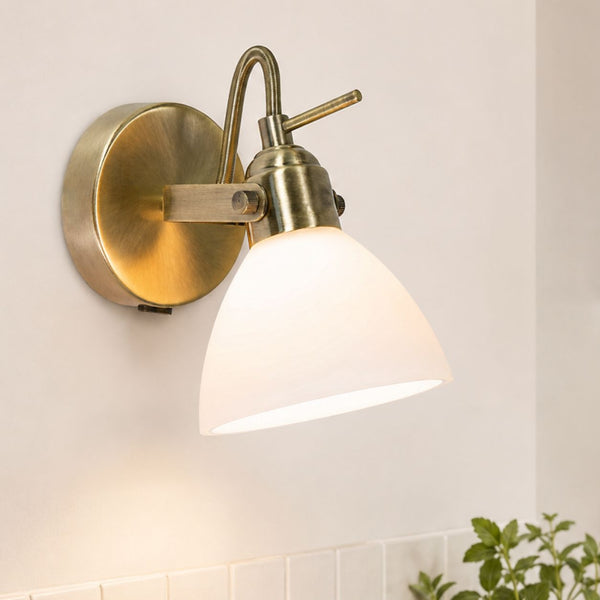
WALL LIGHTS
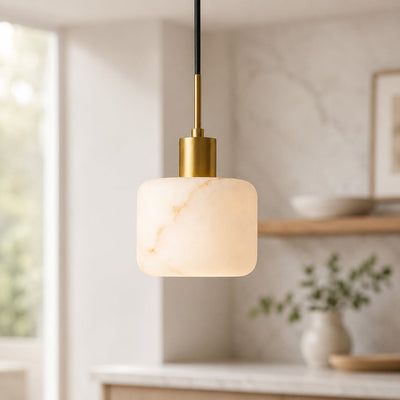
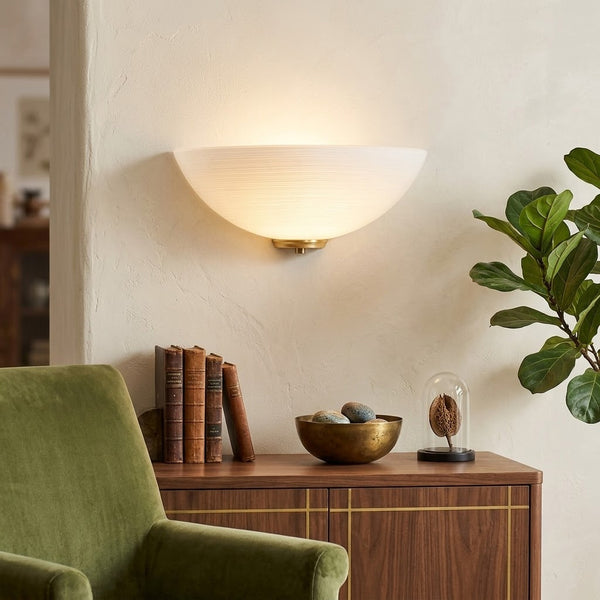
Callas Wall Spot Light — Antique Brass, Opal Glass Shade
Antique BrassG91 lampholder£56In stockView product → -
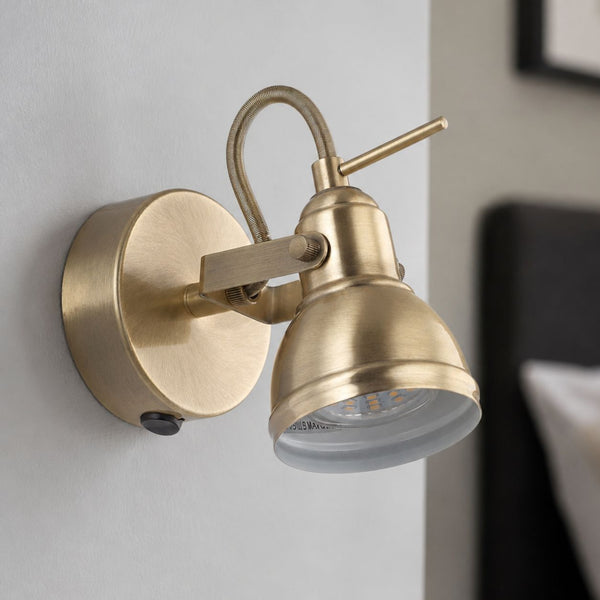
WALL LIGHTS
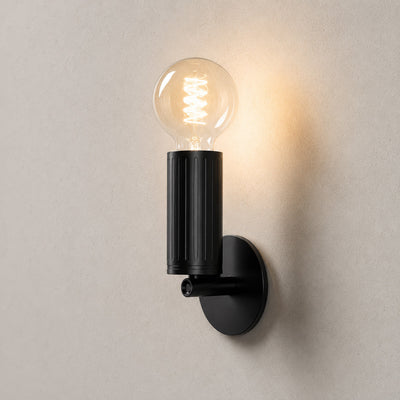
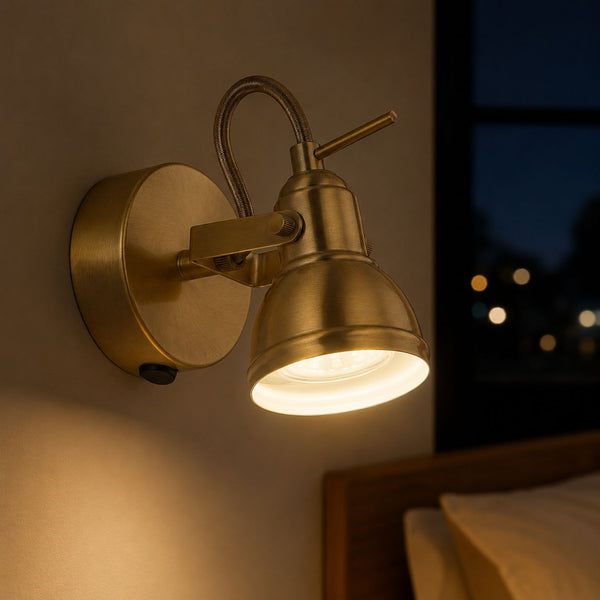
Harlow Industrial Wall Spot Light — Antique Brass, Switched
Antique BrassGU101 lampholder£53In stockView product → -
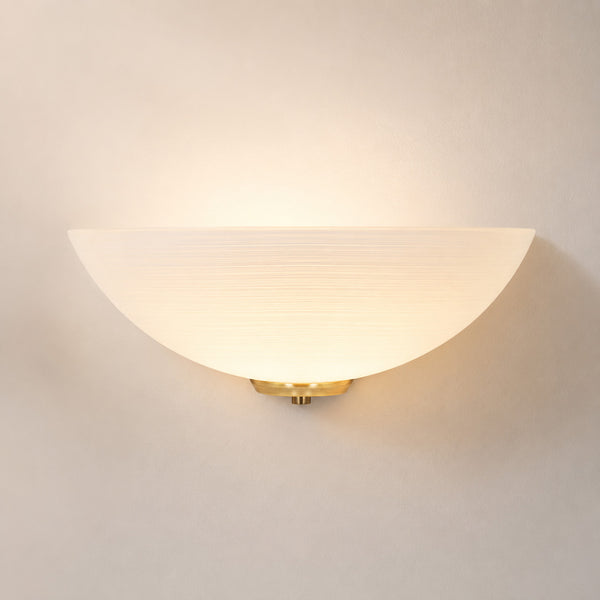
WALL LIGHTS
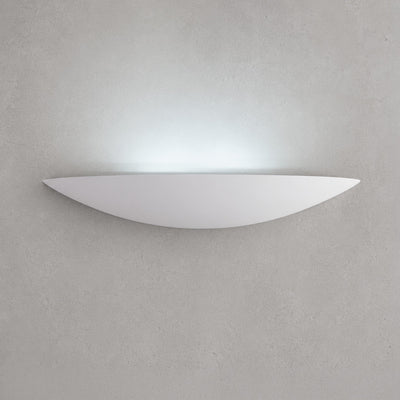
Viena Flush Uplighter Wall Light — Glass, Antique Brass
Antique BrassE27 ES1 lampholder£32In stockView product → -

WALL LIGHTS
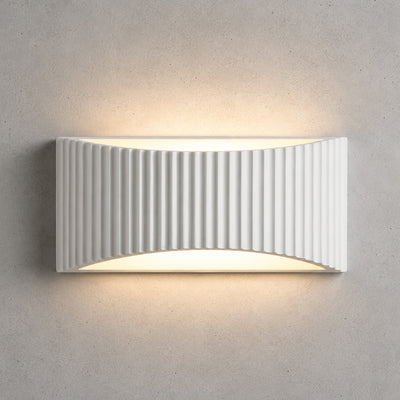
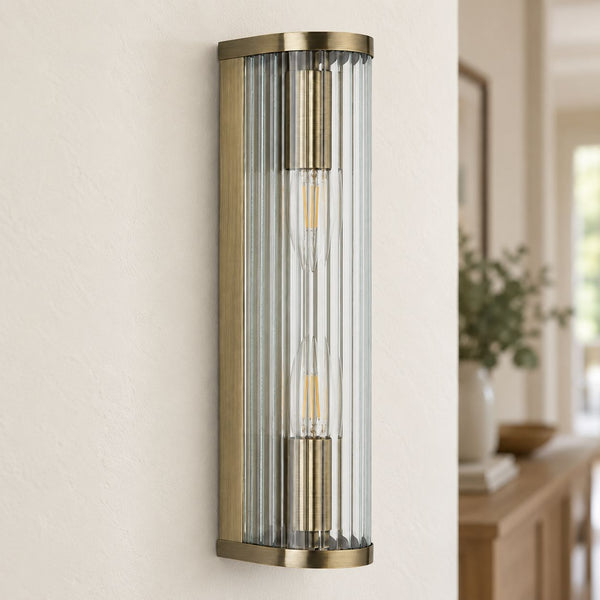
Halo 2-Light Ribbed Wall Sconce — Glass, Antique Brass
Antique BrassE14 SES2 lampholders£95UnavailableView product → -
For your first order
10% off your first light
Leave your email and the code arrives straight away.
Then a short email most weeks. Unsubscribe any time. Privacy policy
Thank you
Your 10% code is on its way to your inbox. Any light, 30 days, no minimum.
-
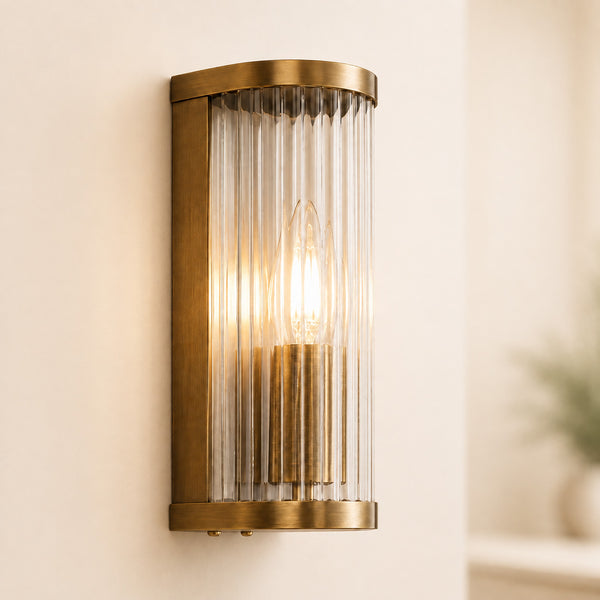
WALL LIGHTS
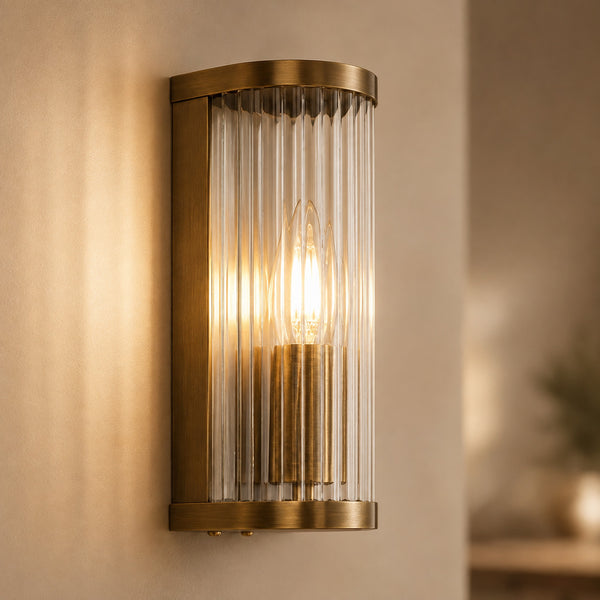
Halo Ribbed Wall Sconce — Glass, Antique Brass
Antique BrassE14 SES1 lampholder£80In stockView product → -
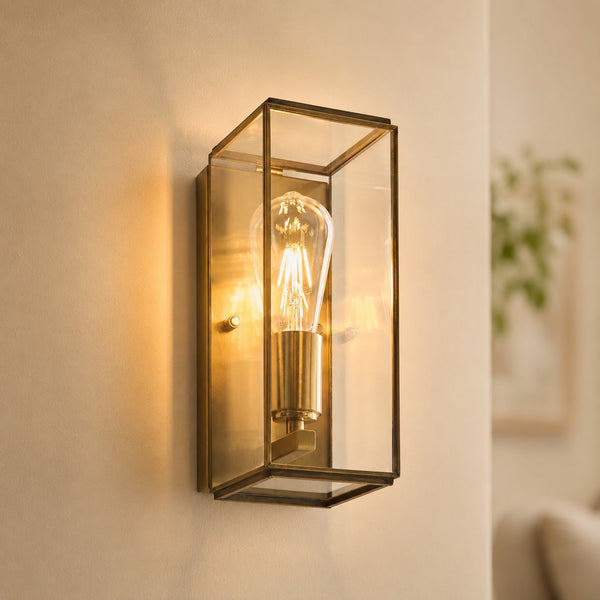
WALL LIGHTS
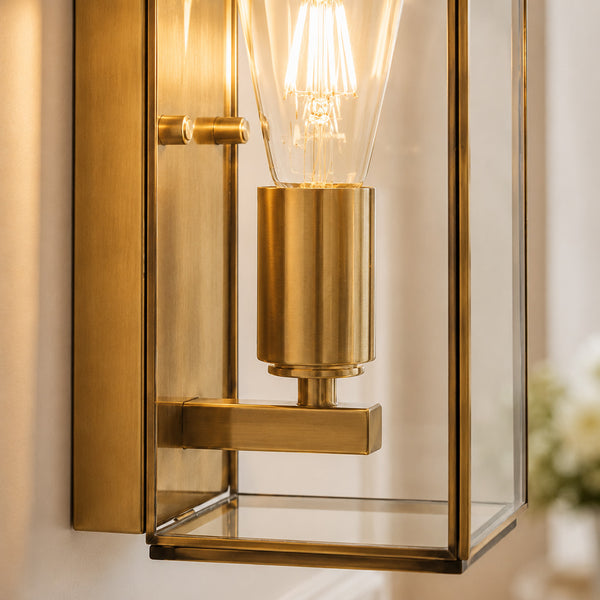
Varel Box Lantern Wall Light — Aged Brass
Aged BrassE27 ES1 lampholder£110In stockView product → -
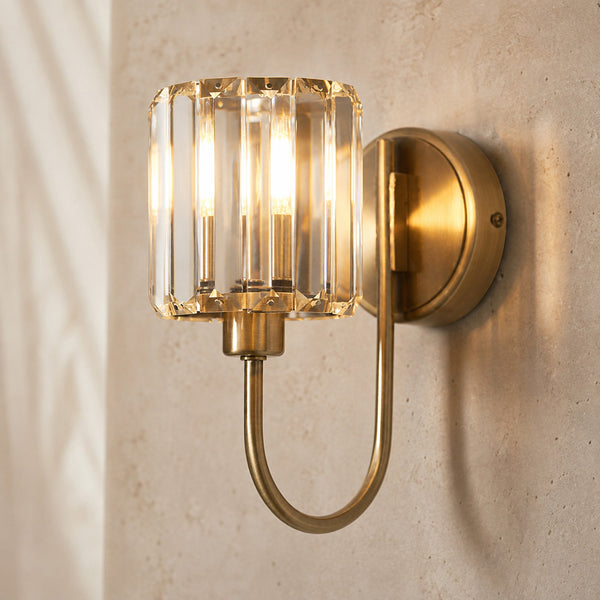
WALL LIGHTS
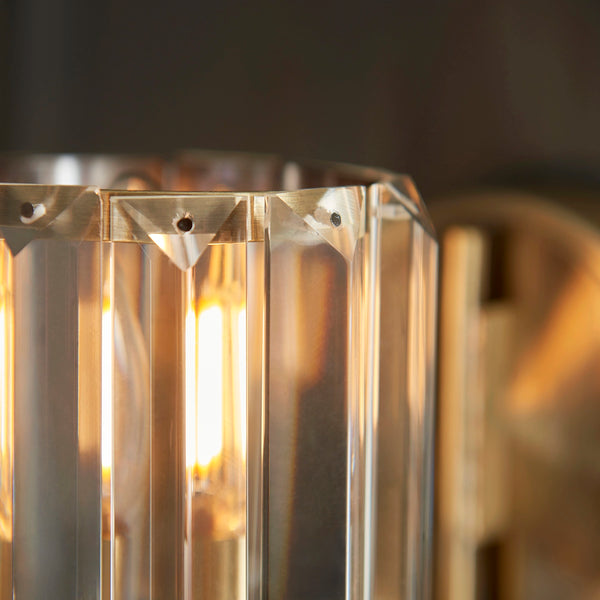
Cortona Faceted Glass Wall Light — Antique Brass
Antique BrassE14 SES1 lampholder£73In stockView product → -
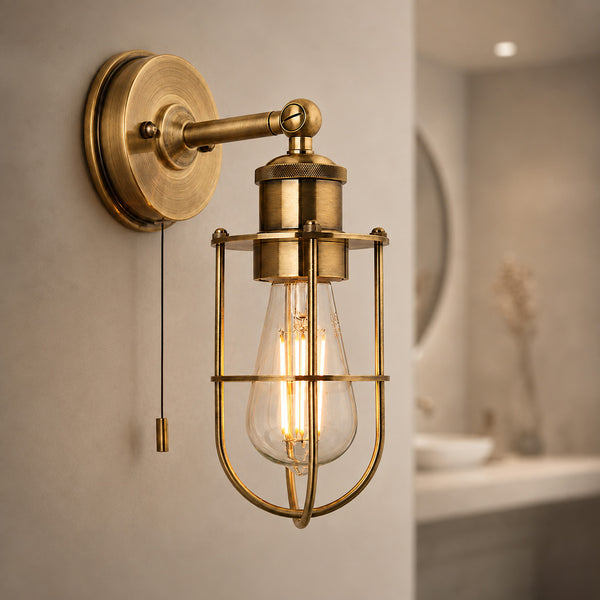
BATHROOM LIGHTING
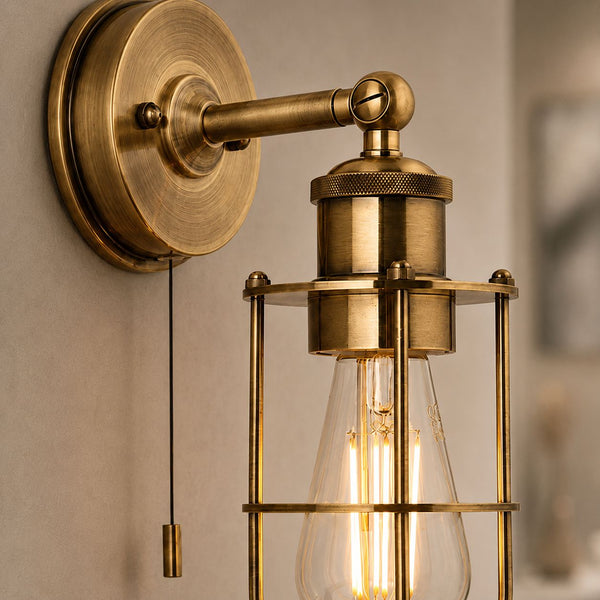
Visby Caged Bathroom Wall Light — Antique Brass, IP44
Antique BrassE27 ES1 lampholder£125In stockView product → -
Signature Signature Small runs, real materials, made to order. The top of the Enso range.
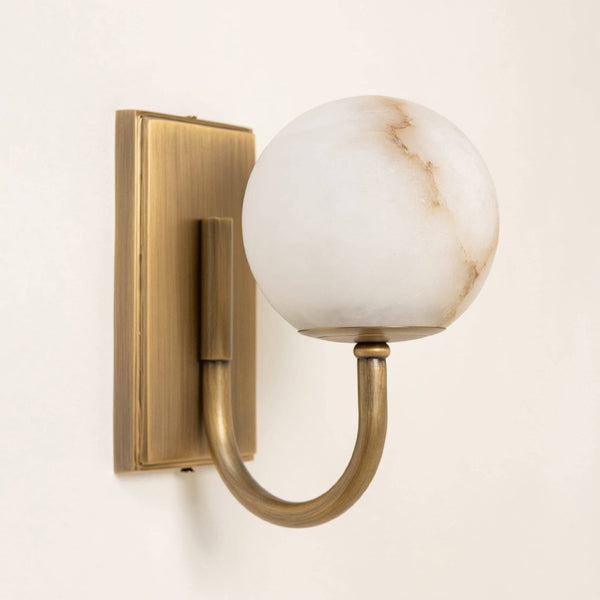
WALL LIGHTS
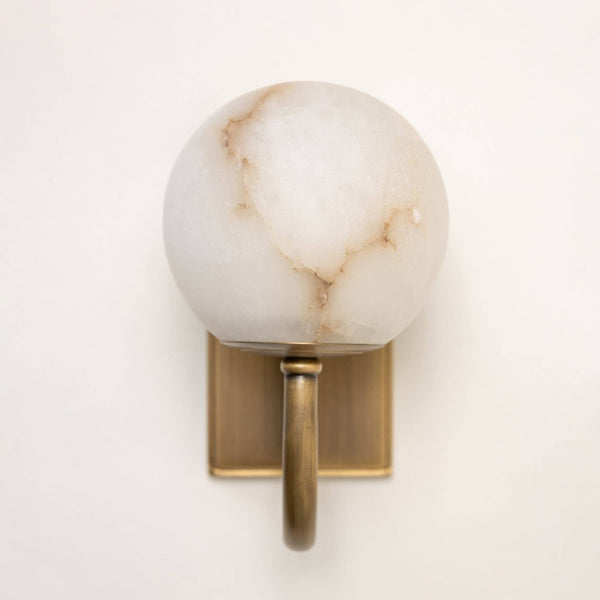
Alabaster Globe Wall Light — Antique Brass
Made in United Kingdom
2 coloursAntique BrassG91 lampholder£185In stockView product → -
Signature Signature Small runs, real materials, made to order. The top of the Enso range. 3 sizes
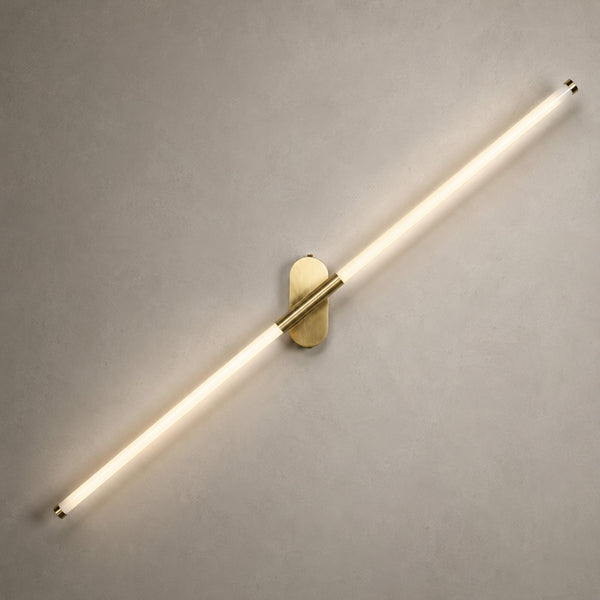
WALL LIGHTS
Akra Antique LED Wall Light — Antiqued Metal
Made in Turkey
Antiqued MetalIntegrated LEDFrom £460In stockView product → -
Signature Signature Small runs, real materials, made to order. The top of the Enso range.
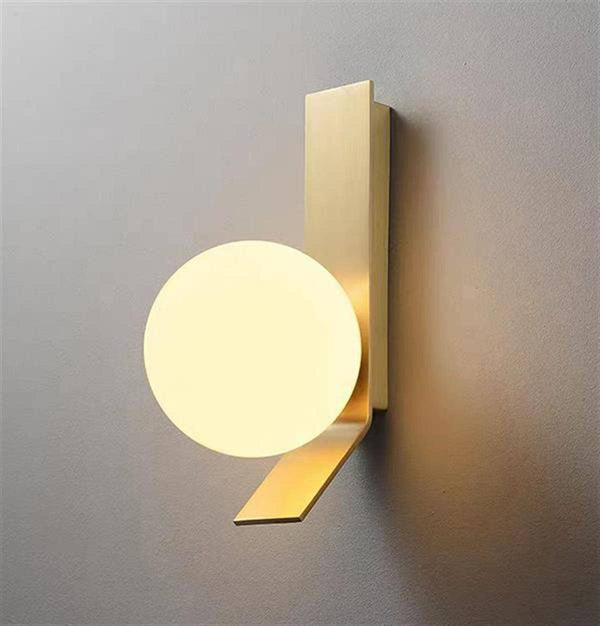
WALL LIGHTS
Afrodit Antique Wall Light — Antiqued Metal & Opal Glass, 26cm
Made in Turkey
Antiqued MetalG91 lampholder£520In stockView product → -
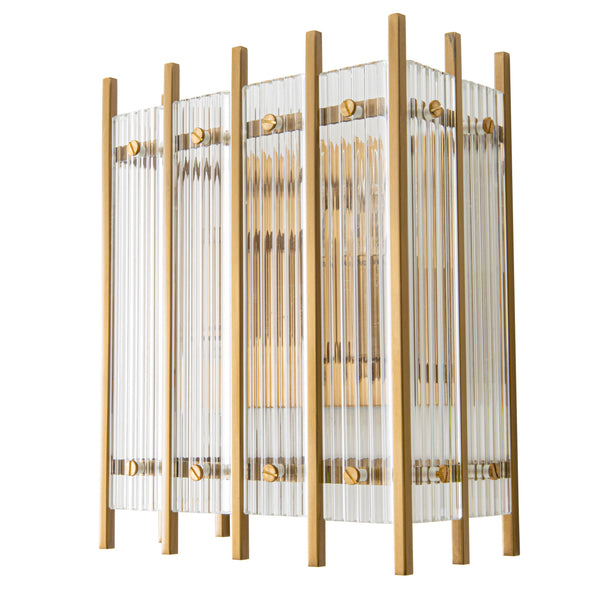
WALL LIGHTS
Leoni Ribbed Wall Lamp — Antique Brass, Glass
Antique Brass£195In stockView product →
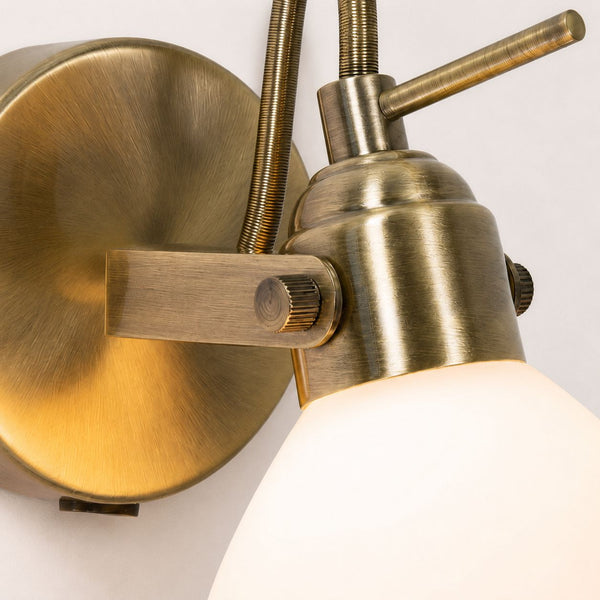

Showing 12 of 16
Buying Guide
Frequently Asked Questions
What height should brass wall lights be fitted at?
Fit decorative wall lights roughly 1.5 to 1.7 metres from the finished floor — about eye level for a standing adult. Beside a bed, 1.5m puts the light at reading height when you are sitting up. In a hallway or above a staircase, keep to the upper end of that range so the fitting sits clear of shoulders. If the light has an exposed bulb, err higher so the lamp itself is not in your sight line.
How far apart should wall lights be spaced along a hallway?
Space wall lights every 2 to 2.5 metres along a corridor. A five-metre hallway lit from a single central point reads as two dark stretches with a bright patch between them, whereas two or three modest points of light read as continuous. In a typical UK terrace hallway that usually means a pair; a long Victorian hall wants three.
Will brass wall lights tarnish over time?
Unlacquered brass develops a patina, darkening where it is handled and staying brighter elsewhere. Many buyers choose it for exactly this reason. Lacquered and plated brass holds its original colour indefinitely and needs only a dry cloth. Never use abrasive metal polish on either finish: on lacquered brass it removes the protective coating, and on unlacquered brass it strips the patina back to bare metal.
Can brass wall lights be used in a bathroom?
Only if the fitting carries an IP rating appropriate to its zone. In UK bathrooms, Zone 1 (directly above the bath or shower to 2.25m) and Zone 2 (within 0.6m of them) both require IP44 as a minimum. Outside those zones a standard fitting is permitted, though IP44 throughout is sensible in a room that fills with steam. Brass pieces in this collection that are bathroom-rated say so on the product page.
Do I need an electrician to fit wall lights in the UK?
A like-for-like replacement of an existing wall light on an existing circuit can usually be done without notification. New wiring, a new switch drop, or any electrical work in a bathroom is notifiable under Part P of the Building Regulations and must be carried out by a registered electrician or signed off by Building Control. Non-compliant work can cause problems with insurance and at the point of sale.
What bulb colour temperature suits brass lighting?
Choose 2700K warm white. Brass has warm golden undertones that a cool bulb neutralises — above 3000K the metal starts to read grey and the room feels clinical. Look for a bulb with a CRI of 90 or above as well: poor colour rendering makes a good brass finish look flat and cheap regardless of the temperature.
Can I add wall lights without rewiring?
Yes. Plug-in wall lights with a visible flex mount on the wall and run to a socket, needing no electrical work at all, and are a legitimate design choice rather than a compromise. Alternatively, a fitting with an integral pull cord or rocker switch can be wired into a nearby lighting circuit without running a separate switch drop, which is considerably less disruptive than a full rewire.
How far do brass wall lights stick out from the wall?
Projection varies from around 7cm for a flush uplighter to 20cm or more for a lantern or swing-arm design. Most fittings in this collection project less than 12cm, which is the usual threshold for a hallway under a metre wide or a wall beside a door. The exact projection is listed in the dimensions on every product page — check it before ordering for a narrow space.