Shop by Type
Up & Down Wall Lights
Wall lights that wash light in both directions — paintable plaster that disappears into the wall, plus brass and black for where you want the fitting seen.
Filters
11 items
Sort Best selling
-

WALL LIGHTS
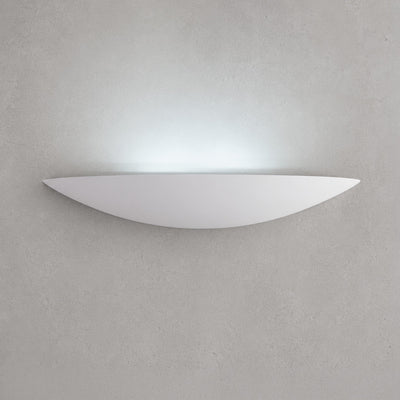
Mykonos Corner Wall Light — Paintable White Plaster, Up & Down
WhiteE14 SES1 lampholder£68In stockView product → -
WALL LIGHTS
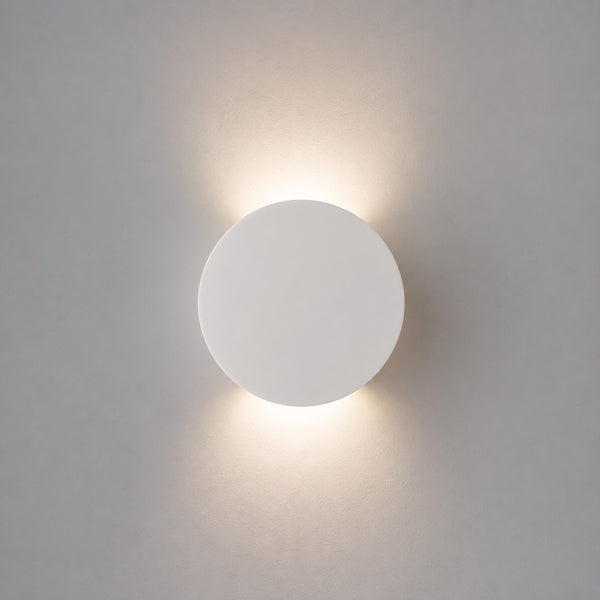
Leiron Round Wall Light — Paintable White Plaster, Up & Down
Paintable WhiteG91 lampholder£58In stockView product → -

WALL LIGHTS
Cubo Cement Up & Down Wall Light — Travertine Look
Sand beigeG92 lampholders£55In stockView product → -

WALL LIGHTS
Bloc Travertine Up & Down Wall Light — Sand Beige
Sand beigeG92 lampholders£85In stockView product → -
For your first order
10% off your first light
Leave your email and the code arrives straight away.
Then a short email most weeks. Unsubscribe any time. Privacy policy
Thank you
Your 10% code is on its way to your inbox. Any light, 30 days, no minimum.
-
OUTDOOR LIGHTING
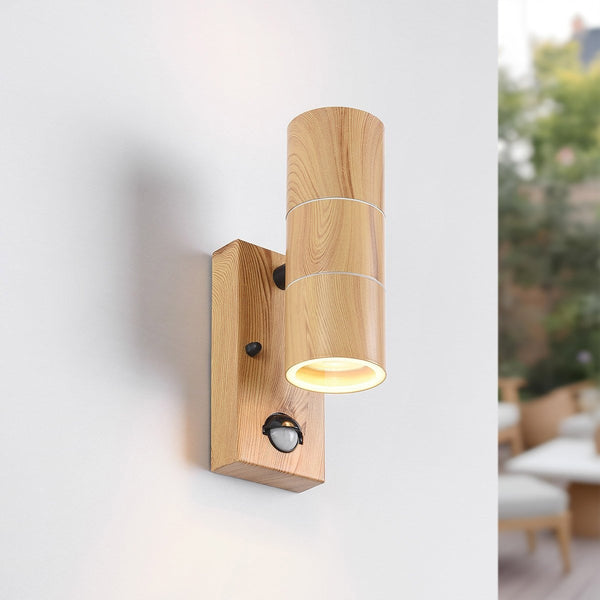
Elm Outdoor Wall Light — Wood Effect, Sensor
Wood effectGU102 lampholders£37In stockView product → -

WALL LIGHTS
Mood Wall Light — Paintable White Plaster, Up & Down
WhiteG92 lampholders£73In stockView product → -

WALL LIGHTS
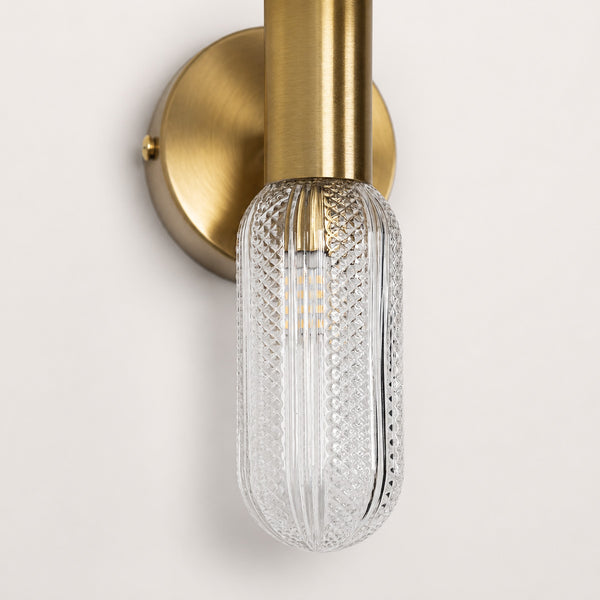
Verona Up Down Wall Sconce — Glass, Antique Brass
Antique BrassG92 lampholders£390In stockView product → -
WALL LIGHTS
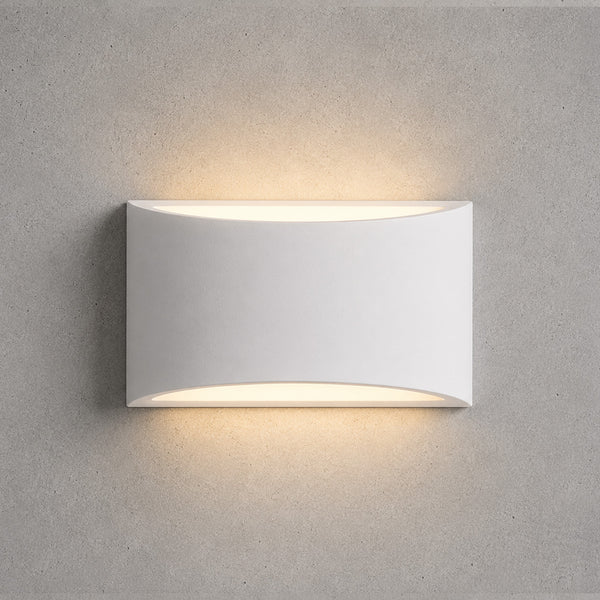
Galea Paintable Up/Down Light — Plaster, White
Smooth WhiteG91 lampholder£32Made to orderView product → -

OUTDOOR LIGHTING
Talia Up Down Wall Light — Aluminium, Wood Effect
Wood effectGU102 lampholders£58In stockView product → -
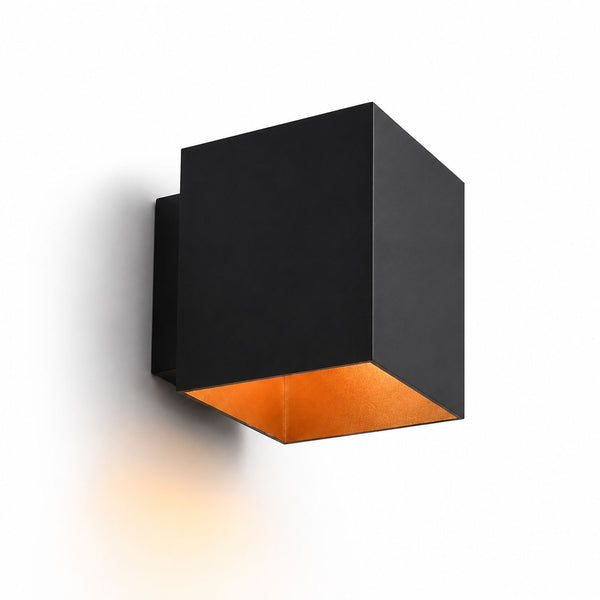
WALL LIGHTS
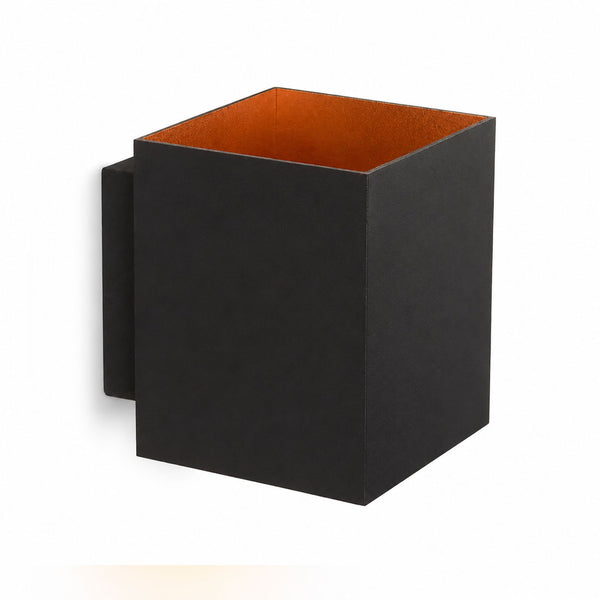
Fay Modern Square Up Down Wall Light — Black with Gold
Black with GoldG91 lampholder£22In stockView product → -
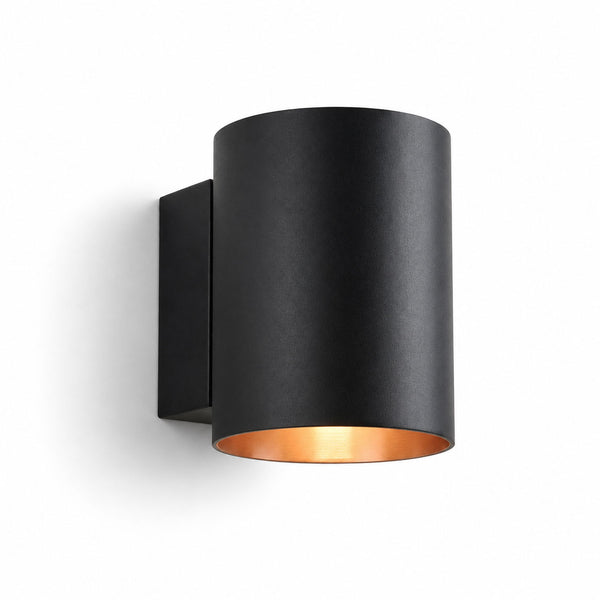
WALL LIGHTS
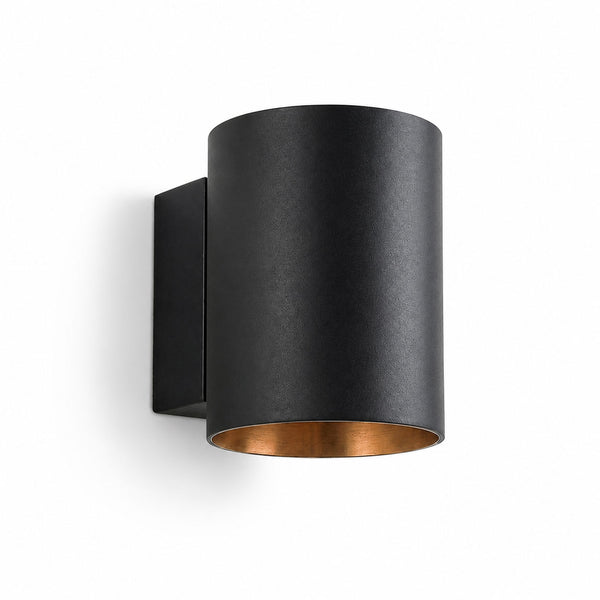
Jen Modern Round Up Down Wall Light — Black with Gold
black with GoldG91 lampholder£22In stockView product →






Buying Guide
Frequently Asked Questions
What is an up and down wall light?
An up and down wall light throws two narrow beams in opposite directions, grazing the wall above and below the fitting rather than lighting the room generally. The result is two soft triangles of light on the wall, no glare at eye level, and a ceiling that reads higher than it is. Most use a single G9 or E14 capsule that fires both ways, so one bulb produces both beams.
Can you paint plaster up and down wall lights?
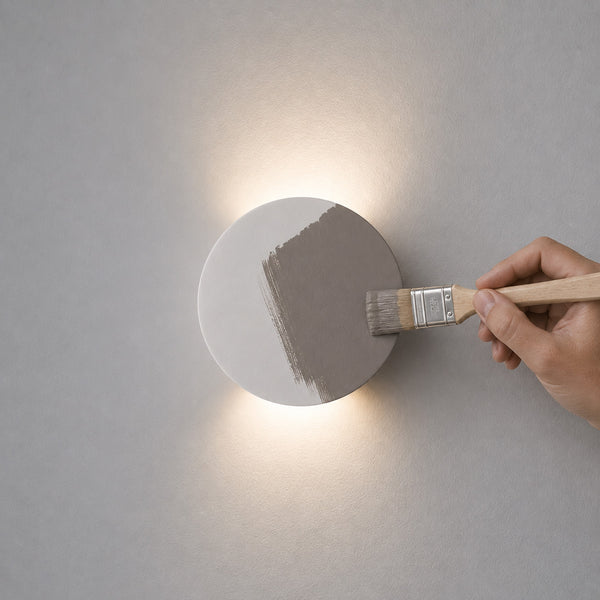
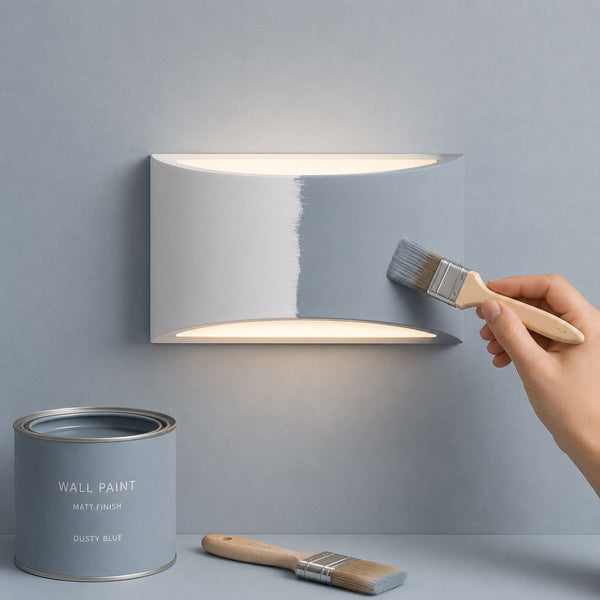
Yes — paintable plaster fittings are supplied unfinished specifically so they can be painted in the same emulsion as the wall. No primer or specialist paint is needed; the tin you used on the wall is the correct product. Paint after installation rather than before, so any handling marks and the joint between fitting and wall are covered in the same coat.
Do up and down wall lights show up imperfections in the wall?
Yes, and this is the most common regret. Because the beams graze the wall at a shallow angle, they exaggerate filler marks, a poor skim or textured wallpaper. On smooth, well-finished plaster the effect is clean and dramatic. If the wall is not in good condition, either make good first or choose a fitting that projects further from the wall so the light strikes at a wider angle.
What height should up and down wall lights be fitted at?
Mount at 1.5 to 1.7 metres from the finished floor, the same as any decorative wall light. Where ceilings are tall, the upper end of that range looks better because it centres the two triangles of light within the wall rather than pushing the upper beam into the ceiling. On a staircase, set each fitting at the same height above its own tread so the lights climb with the stairs.
How far apart should up and down wall lights be spaced?
Space them every 2 to 2.5 metres along a corridor or wall. Closer than 2 metres the triangles of light begin to overlap and lose definition; further apart and you get bright patches with dark stretches between. In a typical UK terrace hallway this usually means a pair, while a long Victorian hall suits three.
Are up and down wall lights suitable for outdoors or bathrooms?
Only where the specific fitting carries an appropriate IP rating. Outdoor use needs IP44 as a minimum for a sheltered wall and IP65 for exposed positions. In bathrooms, Zones 1 and 2 both require IP44 minimum. Plaster fittings are for interior use only, as gypsum absorbs moisture. Rated pieces state their IP figure on the product page.
Can up and down wall lights be dimmed?
Most can, and it is worth wiring in from the start, since these are atmosphere lights rather than task lights. Use a trailing-edge dimmer rather than the older leading-edge type, which causes flicker and buzz with LED lamps. Check that both the fitting and the bulb are marked dimmable, and that the dimmer's minimum load suits the low wattage of a single LED capsule.
Do I need an electrician to fit up and down wall lights?
Almost all of these are hardwired, so yes in practice. A like-for-like swap on an existing wall light point may not be notifiable, but new wiring, a new switch drop, or any electrical work in a bathroom is notifiable under Part P of the Building Regulations and must be done by a registered electrician or signed off by Building Control.
You might also like